
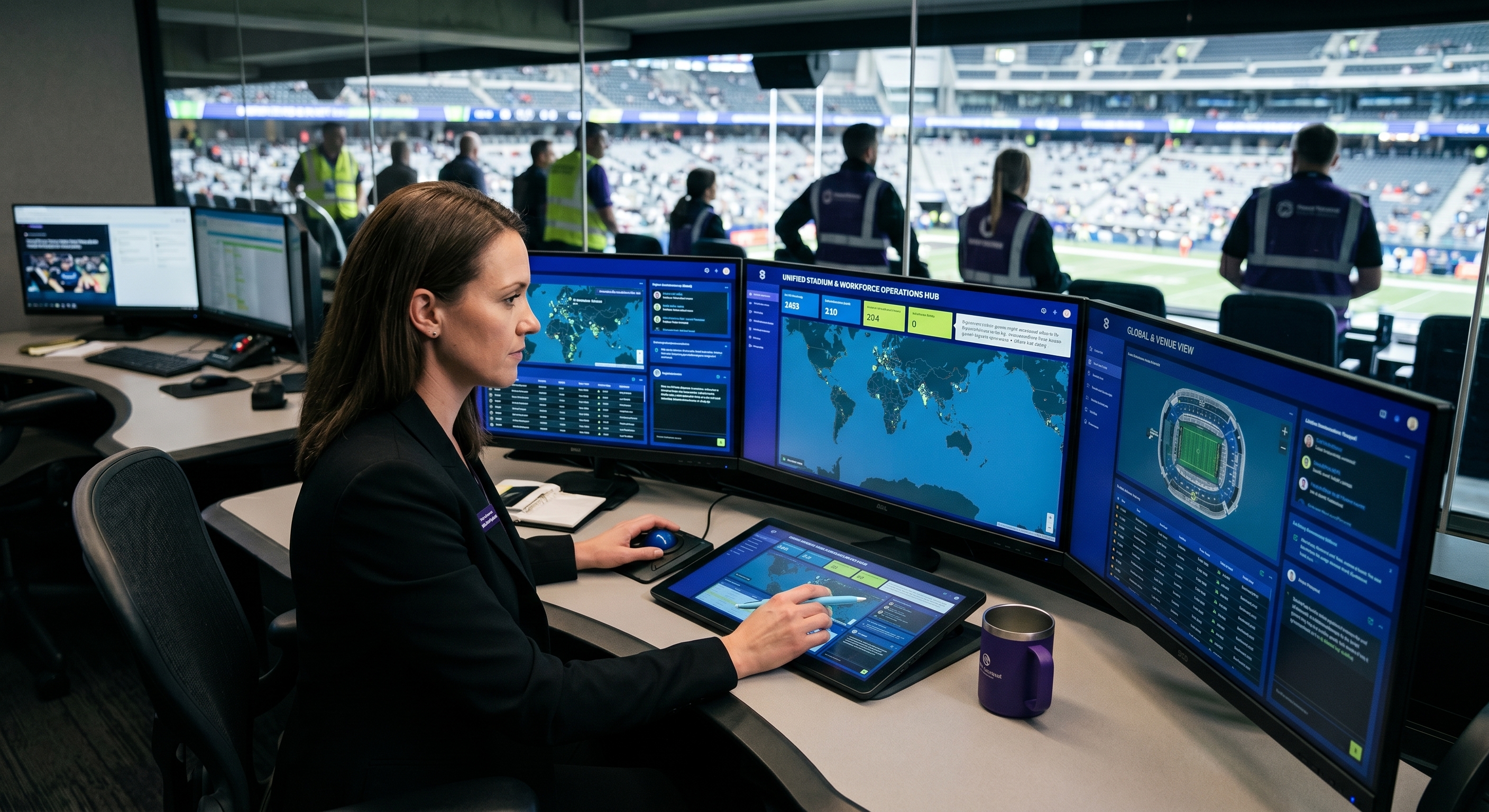
The 8 Best Temporary Workforce Management Software for Stadiums
Key Takeaways
- Stadium operations require specialized tools to manage thousands of temporary staff across multiple roles and shifts
- The right temporary workforce management software improves attendance rates, communication, and real time visibility
- Modern platforms combine scheduling, communication, and automation to streamline workforce management for events
Managing large scale stadium events is one of the most operationally complex workforce challenges today. From security and concessions to ushers and cleaning crews, stadiums rely heavily on temporary staff who must be coordinated with precision. This is where the right temporary workforce management software becomes essential.
Why Stadiums Need Temporary Workforce Management Software
Stadiums operate in a high pressure, high volume environment where workforce demands can change rapidly. A single event can require hundreds or even thousands of temporary workers, each assigned to different roles, shifts, and zones.
Manual tools such as spreadsheets or generic HR systems simply cannot handle this level of complexity. They lack real time visibility, flexibility, and communication capabilities, which often leads to errors, understaffing, and last minute chaos.
Dedicated solutions for workforce management for events provide a centralized system where managers can schedule, communicate, and track staff in real time. These platforms are designed specifically for dynamic environments like stadiums, where speed and accuracy are critical. Many organizations only fully recognize these benefits after moving away from manual processes and adopting more structured workforce systems.
Key Challenges of Managing Stadium Staff at Scale
Managing temporary staff in stadiums presents a unique set of challenges that go far beyond standard workforce planning. The scale, pace, and unpredictability of live events make coordination significantly more complex than in traditional workplaces.
- Coordinating multiple roles
Stadiums rely on a wide mix of roles, each with different skills and responsibilities - Handling last minute changes
Schedules often need rapid adjustments due to no shows or operational shifts - Ensuring staff attendance
Temporary workers may miss shifts or arrive late without proper systems in place - Communication gaps
Large venues make it difficult to keep all staff aligned in real time - Compliance and training tracking
Ensuring workers are qualified for specific roles can be difficult at scale - Managing multiple vendors and agencies
Working with several staffing providers adds layers of coordination
These challenges make it clear that manual processes are no longer effective for managing large scale stadium operations.
How We Evaluated the Best Temporary Workforce Management Software
To identify the top platforms for stadium environments, we evaluated each solution based on criteria that reflect the real demands of event operations.
- Scalability
Ability to manage large, fluctuating workforces across multiple events - Scheduling flexibility
Tools that support fast, dynamic shift planning and changes - Mobile accessibility
Simple and reliable access for staff on mobile devices - Real time communication
Built in messaging and notifications for instant coordination - Automation capabilities
Reducing manual tasks through scheduling and attendance tools - Integration and reporting
Connecting workforce data with payroll and performance insights - Industry relevance
Designed to support event staff scheduling software and stadium use cases
We also considered how these capabilities align with evolving workforce strategies in high volume environments.
List of The Best Temporary Workforce Management Software for Stadiums
1. Ubeya - Best for Stadiums managing large scale temporary workforces
Ubeya is a leading platform built specifically for managing temporary workforces in high volume environments such as stadiums, arenas, and large scale events. It offers a fully integrated solution that covers every stage of workforce operations, from recruitment and scheduling to communication and payroll readiness.
One of Ubeya’s key strengths is its mobile first approach. Staff can view schedules, confirm shifts, communicate with managers, and receive updates all in one app. This significantly reduces confusion and improves attendance rates. Managers benefit from real time visibility into workforce activity, allowing them to respond quickly to last minute changes and maintain full control over operations during live events.
The platform also excels in automation. Scheduling tools allow managers to assign shifts based on availability, qualifications, and past performance. Automated reminders help reduce no shows, while built in tracking ensures accurate time and attendance data. This reduces administrative workload and improves overall workforce reliability.
Ubeya is particularly effective in complex environments where multiple vendors and staffing agencies are involved. It centralizes operations, making it easier to manage large teams without losing control or visibility. Managers can coordinate across different workforce sources while maintaining consistency in communication and performance tracking.
Another advantage is its ability to support compliance and training requirements. Managers can ensure that only qualified staff are assigned to specific roles, reducing risk and improving event quality. This combination of flexibility, automation, and real time control makes Ubeya especially well suited for stadium operations where precision and scalability are critical.
2. Deputy - For teams looking for simple and efficient scheduling tools
Deputy is a widely used workforce management tool known for its intuitive interface and reliable scheduling capabilities. It enables managers to create shifts, track time, and communicate with staff in a streamlined way.
The platform includes mobile functionality, allowing workers to stay updated on schedules and changes. Its automation features help reduce administrative workload and improve scheduling efficiency.
While not specifically designed for stadiums, Deputy can be adapted for smaller or mid sized event operations.
3. When I Work - For businesses needing scheduling combined with reporting
When I Work focuses on scheduling and communication, offering an easy to use platform for managing temporary teams. Its shift planning tools and messaging features help reduce scheduling conflicts and improve coordination.
The mobile app ensures that staff remain informed and engaged, which is essential in event driven environments.
Although it lacks some advanced features for large scale stadium operations, it remains a practical option for basic temporary staff management.
4. Planday - For Businesses needing scheduling with workforce insights
Planday offers workforce management capabilities with strong scheduling and reporting features. Managers can assign shifts, monitor attendance, and manage payroll related data within one system.
Its communication tools help ensure that staff receive timely updates, while reporting features provide insights into workforce performance.
Planday can support stadium environments but may require additional customization for larger operations.
5. Humanity - For teams focused on data driven scheduling and automation
Humanity provides advanced scheduling tools with a focus on automation and efficiency. It allows managers to create optimized schedules based on staff availability and qualifications.
The platform includes communication features that help teams stay aligned during events, making it suitable for dynamic environments.`
Humanity is best suited for organizations that want to leverage automation to improve scheduling processes.
6. Shiftboard - For large organizations with advanced workforce planning needs
Shiftboard is designed for complex workforce environments and offers robust scheduling, compliance tracking, and workforce analytics.
It is capable of supporting large teams and detailed workforce planning, making it a viable option for stadium operations with more complex requirements.
However, it may require additional setup and training compared to more user friendly platforms.
7. Connecteam - For teams prioritizing mobile communication and workforce engagement
Connecteam is a mobile focused workforce management platform that combines scheduling, communication, and task management. It is designed to keep frontline workers connected and informed.
Its features include time tracking, shift management, and engagement tools that help improve communication and coordination.
While it can support event environments, it is often better suited for smaller teams.
8. 7shifts - For hospitality focused teams managing event based staff
7shifts is primarily built for hospitality but can be adapted for event staffing. It includes scheduling, time tracking, and communication tools that help streamline workforce operations.
The platform is known for its ease of use and ability to simplify scheduling processes, although it is not specifically tailored to stadium environments.
Key Features to Look for in Stadium Staffing Software
Choosing the right solution requires understanding the features that truly impact stadium operations. Not all platforms are built to handle the scale and complexity of large events.
- Scheduling flexibility
Managers need to create and adjust schedules quickly, especially when dealing with last minute changes. Assigning shifts based on availability, skills, and experience helps improve efficiency and ensures proper coverage.
- Real time communication
Stadium environments move quickly, and delays in communication can disrupt operations. Built in messaging ensures that staff receive updates instantly and remain aligned throughout the event.
- Mobile accessibility
Temporary workers depend on their phones to access schedules and updates, so a strong mobile experience improves engagement and reduces confusion.
- Automation
Features such as reminders, attendance tracking, and shift confirmations reduce manual work and help ensure that all roles are filled.
- Scalability and integration
The platform must support large teams and integrate with payroll and reporting systems to maintain efficiency as operations grow.
FAQ
Can workforce management software handle multiple vendors and staffing agencies?
Yes, modern platforms are designed to centralize operations across multiple vendors and staffing agencies within a single system. Managers can oversee scheduling, track attendance, and maintain consistent communication across all external partners. This reduces fragmentation and improves coordination, especially during large events. By consolidating workforce data in one place, stadium operators gain better visibility and can ensure consistent standards across all staffing providers.
How does real time tracking improve event day operations?
Real time tracking gives managers immediate visibility into staff attendance, locations, and activity throughout the event. This allows them to quickly identify gaps in coverage and reassign workers where needed. It also helps teams respond faster to unexpected issues, such as delays or no shows. With better visibility, managers can make informed decisions on the spot, ensuring smoother operations across all areas of the stadium.
How do stadiums manage staff across multiple roles during events?
Stadiums use workforce management platforms to assign staff to roles based on their skills, certifications, and availability. These systems help organize workers into specific teams and zones, ensuring that each role is filled by someone qualified. Managers can quickly adjust assignments if needed, maintaining flexibility throughout the event. This structured approach improves coordination and ensures that operations run efficiently across different departments.
How do stadiums reduce no shows among temporary staff?
Reducing no shows requires a combination of proactive communication and automated tools. Workforce platforms send reminders and require staff to confirm their shifts in advance, helping reinforce accountability. Many systems also track attendance history, allowing managers to identify and prioritize reliable workers for future shifts. By improving communication and visibility, stadiums can significantly reduce last minute staffing gaps and maintain consistent coverage.
.jpg)

