
5 Workforce Management Lessons Every Event Operator Can Learn from Peak Events
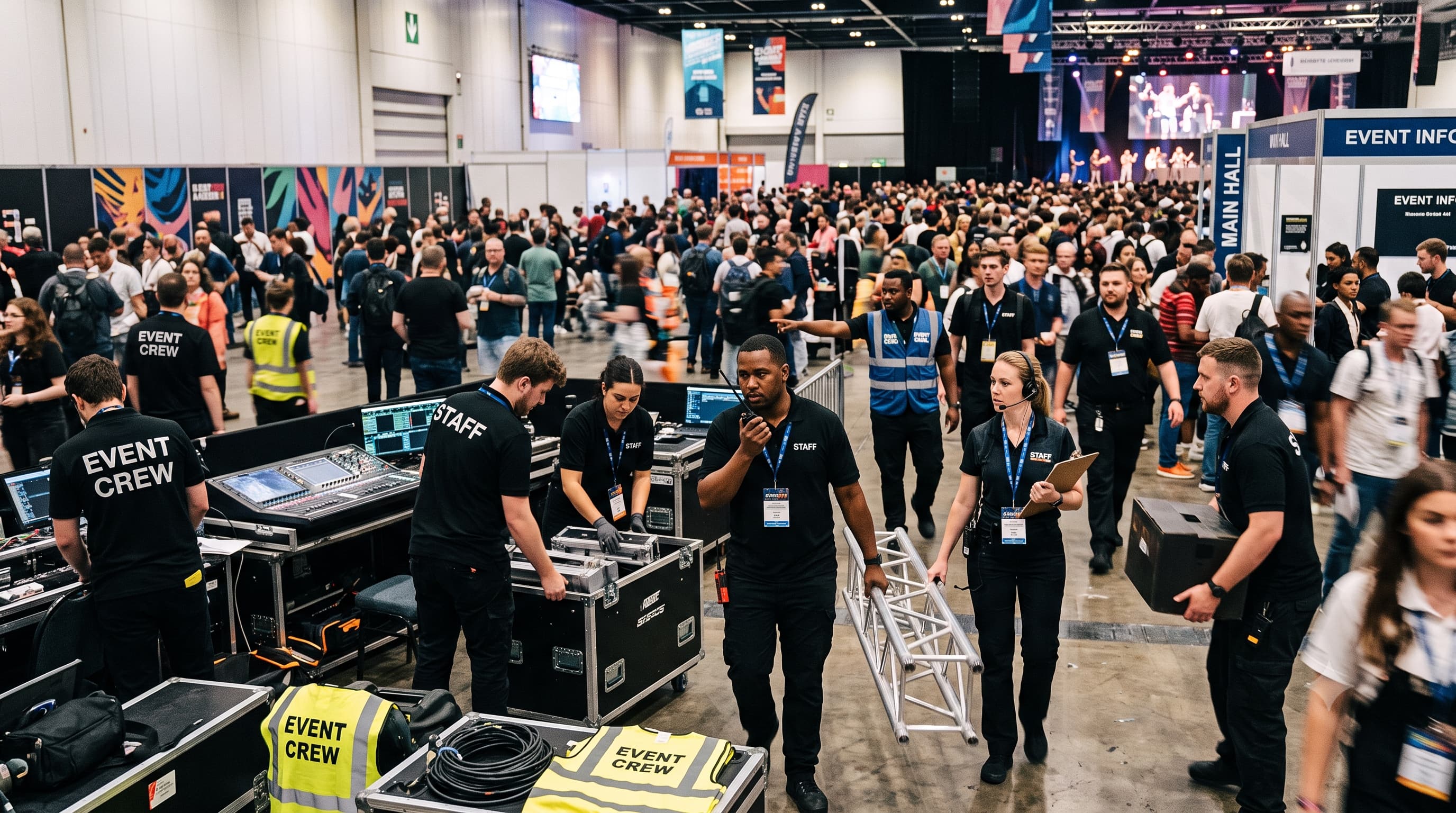
As the World Cup reaches its final week, the world is focused on what happens on the pitch. Behind every major sporting event, however, operations teams are managing thousands of moving parts: people, positions, agencies, schedules, check-ins and last-minute changes.
Over the past few weeks, we’ve had a front-row view of workforce operations under pressure, from Silverstone to Wimbledon. Different venues. Different sports. The same operational reality: planning matters, but the ability to see and respond in real time is what protects event day.
Peak events do more than increase headcount. They compress decision-making time. A small visibility gap on a normal day can become a queue, an uncovered position or a poor guest experience when the venue is full and the world is watching.
Here are five lessons every venue and event operator can take into their next high-pressure event.
1. Plan for disruption, not the perfect roster
Weeks before an event, the goal is often to build the perfect plan: every shift filled, every position covered and every worker assigned.
But a full roster is only a snapshot.
By event day, people may have dropped out. Transport problems may delay arrivals. Demand may move unexpectedly between entrances, hospitality areas or concessions. Operating requirements may change. A team that looked fully covered the day before can suddenly find itself below plan in a critical area.
The strongest workforce operations are not those that avoid every change. They are those that can absorb change without losing control.
That means preparing replacement pools in advance, identifying which roles are most operationally critical and establishing clear escalation processes. Managers should know when an issue needs intervention, who has the authority to act and where suitable replacement workers can be found.
The key question is not simply:
Is every shift filled?
It is:
How quickly can we respond when the plan changes?
Technology can support that process, but resilience also depends on clear ownership. When a shortage appears, someone should know who is responsible for resolving it—and have the information needed to do so.
The practical test: If two people drop out of critical positions three hours before opening, can your team find and contact qualified replacements without starting a new spreadsheet or messaging chain?
2. Treat check-in as an operational control point
A worker appearing on a schedule does not mean they are at the venue, in the correct location or ready to start.
The roster shows intent. Check-in shows reality.
This is where many event-day blind spots begin. If attendance is being recorded on paper, across separate systems or by different supervisors, venue leadership may not have a complete picture until a manager reports a problem.
By that point, the gates may be opening.
Check-in should give operations teams a live view of:
- Who was scheduled
- Who has arrived
- Who is late
- Which positions remain uncovered
- Where the greatest operational risk is developing
At Silverstone, a casual workforce that had grown from approximately 80 people to more than 800 was still being checked in using printed attendance sheets. Moving to mobile check-in reduced the process from around 20 minutes to two minutes. Watch our recent webinar with Silverstone here.
The benefit was not only a shorter queue. Faster, digital check-in gave managers earlier visibility of attendance and more time to act before gaps affected the operation.
That distinction matters. Attendance technology should not simply create a more efficient record after the event. It should help managers make better decisions before and during it.
The practical test: Can an event-day manager see scheduled headcount versus actual attendance, broken down by area and workforce provider, without contacting multiple people?
3. Create one operating picture across every workforce
Large events rarely rely on one type of worker.
A venue may be coordinating permanent employees, an internal casual workforce, catering teams, security providers, specialist contractors and staff supplied by several external agencies.
Each provider may manage its own people effectively. The problem comes when no one can see the combined operation.
One agency knows that it has supplied 95% of its commitment. Another knows that three workers are running late. A venue manager knows that a particular entrance is below plan. But unless that information comes together, leadership cannot understand the overall risk.
This fragmentation also makes it harder to redeploy people. One area may have spare capacity while another is under pressure, but managers cannot act if they cannot see both sides of the operation.
A single operating picture should show:
- Who is expected
- Who has confirmed
- Who has checked in
- Who has not arrived
- Which company or team employs them
- Where they have been deployed
- Whether they hold the required skills or certifications
This does not mean removing agencies or changing established supplier relationships. It means giving internal teams and external partners a shared version of event-day reality.
It also creates more constructive conversations after the event. Instead of relying on impressions, operators and suppliers can review fill rates, attendance, punctuality and performance using the same information.
The practical test: Can your operations team see the complete workforce position in one place, regardless of which team, department or agency supplied each worker?
4. Give managers answers, not another dashboard
Event-day managers do not need more information competing for their attention. They need to know what requires action.
A dashboard showing hundreds of shifts and attendance records may be technically comprehensive, but it is not necessarily operationally useful.
The most useful systems should help managers answer questions such as:
- Which areas are below plan right now?
- Which uncovered positions present the greatest risk?
- Are qualified replacement workers available?
- Can someone be moved without creating a new problem elsewhere?
- Is this an isolated issue or part of a wider pattern?
This is where AI can become genuinely useful in event operations.
The opportunity is not to remove experienced managers from the decision. It is to help them process live information faster. AI can identify unusual patterns, highlight emerging shortages, rank suitable replacements or suggest where intervention is most urgently needed.
But the recommendation must remain understandable. A manager should be able to see why someone has been suggested for a position—based on factors such as skills, availability, performance, venue familiarity or compliance—not simply receive a mysterious automated answer.
AI’s role is not to replace event-day judgement. It is to shorten the distance between a signal and a decision.
The practical test: When something changes, does your technology tell managers what needs attention now, or does it simply give them more data to interpret?
5. Treat every event as preparation for the next one
Once the crowds leave, operational teams naturally move on quickly. During busy season, the next event may already be approaching.
But the period immediately after an event contains some of the most valuable information available to workforce leaders.
A structured post-event review should compare the original plan with what actually happened:
- Where did attendance fall below expectations?
- Which positions were consistently difficult to fill?
- Where were workers redeployed?
- Which teams or agencies performed particularly well?
- Where did late arrivals create pressure?
- Which areas required more—or fewer—people than planned?
- What feedback did workers and managers provide?
The purpose is not to produce another report that no one revisits. It is to convert event-day experience into changes for the next plan.
That might mean adjusting arrival times, building a larger pool for certain roles, changing briefing processes, improving communications or allocating more people to a particular area.
Historical information can also make future planning more accurate. Instead of beginning each event with assumptions, operators can plan around actual attendance, demand and performance patterns.
Busy season should not mean responding to the same emergencies again and again. Every event should make the operation more prepared for the next one.
The practical test: Can your team point to specific changes in the next workforce plan that came directly from the previous event’s data?
Pressure exposes the operation behind the plan
Silverstone, Wimbledon and the World Cup are different events, operating at different scales and under different conditions.
But the underlying workforce challenge is remarkably consistent.
The audience sees the spectacle. Operations teams see the people, positions, suppliers, arrival times, gaps and decisions that make it possible.
Your busiest event will expose the difference between a workforce plan that looks complete and a workforce operation that is genuinely ready.
If the operation depends on disconnected spreadsheets, manual check-ins, individual messaging groups and the knowledge of a few experienced coordinators, peak demand will magnify every gap.
When teams have a shared operating picture, live attendance visibility, clear escalation processes and the ability to act quickly, they are better prepared for the inevitable moment when the plan changes.
Because event-day success is not about preventing every unexpected situation.
It is about seeing what is happening - and responding before the audience ever knows there was a problem.
.jpg)

