
Best 10 Crew Management Software for Event, Hospitality, and Staffing Operations
Key Takeaways
- Crew management platforms help organizations coordinate scheduling, communication, attendance tracking, and workforce deployment from a single system.
- The best solutions support both internal employees and external agency workers without requiring multiple tools.
- Event, hospitality, and staffing businesses have different operational needs, making industry-specific functionality important when selecting a platform.
- Ubeya is the strongest overall choice for event, hospitality, and staffing operations thanks to its end-to-end workforce management capabilities and mobile-first workforce experience.
- The right platform can reduce no-shows, improve workforce visibility, streamline payroll preparation, and simplify large-scale workforce coordination.
Managing large teams across multiple locations, shifts, and client requirements has become increasingly complex. Whether you're staffing a major sporting event, coordinating hotel teams during peak seasons, or managing temporary workers across client sites, spreadsheets and disconnected systems create inefficiencies that quickly impact operations.
Modern crew management software gives managers real-time visibility into workforce availability, scheduling, attendance, communication, and compliance. The best platforms also provide mobile experiences that keep workers connected and informed wherever they are assigned.
How Crew Management Differs Across Events, Hospitality, and Staffing
Event organizations typically manage large numbers of temporary workers across venues, shifts, and roles. Scheduling flexibility, real-time communication, attendance tracking, and last-minute workforce adjustments are critical. Organizations managing large pools of temporary workers often face challenges around recruitment, deployment, communication, and retention. These workforce complexities become even more pronounced as events increase in size and frequency.
Hospitality businesses focus on maintaining service quality while managing fluctuating demand. Hotels, restaurants, and venues require accurate scheduling, labor cost control, compliance management, and employee engagement tools that support retention.
Staffing agencies face a different challenge. They must coordinate workers across multiple clients while maintaining visibility into worker availability, certifications, attendance history, and payroll preparation. Agencies also need strong client-facing workflows and workforce deployment capabilities.
Because of these differences, the best platforms offer flexibility that allows organizations to adapt workflows to their operational model rather than forcing teams into rigid processes.
Best 10 Crew Management Software for Event, Hospitality, and Staffing Operations
1. Ubeya
Best For: Event, hospitality, and staffing organizations managing large flexible workforces.
Ubeya is a comprehensive workforce management platform built specifically for organizations that rely on dynamic, shift-based teams. Unlike traditional scheduling tools that focus primarily on workforce planning, Ubeya combines scheduling, communication, attendance management, payroll preparation, and workforce engagement into a single platform.
The platform is particularly effective for organizations that need to coordinate both internal employees and external agency workers. Managers gain a real-time view of workforce availability while employees receive a mobile-first experience that simplifies shift management, communications, and onboarding.
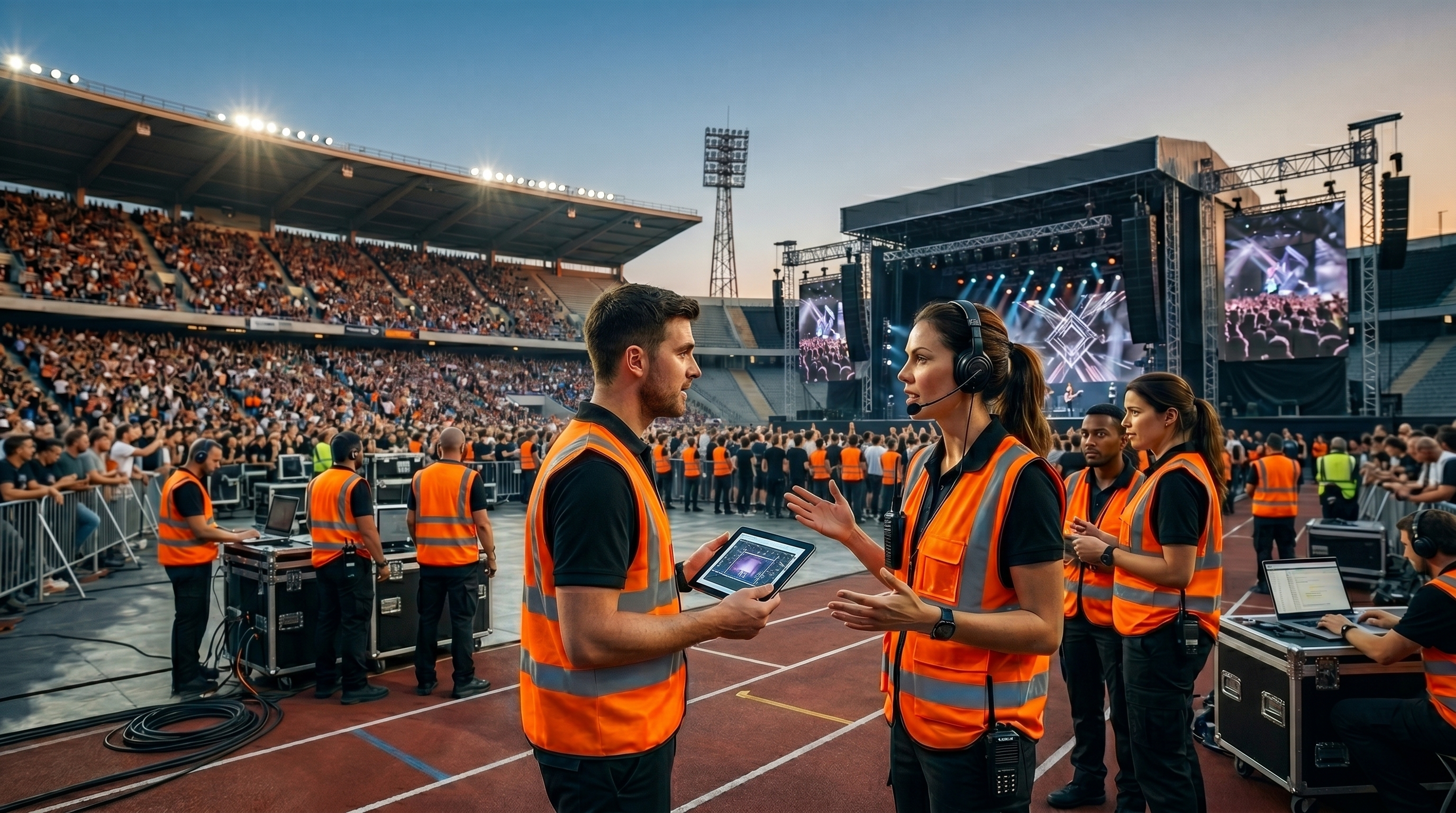
Organizations running large venues, staffing operations, hospitality groups, and event businesses benefit from Ubeya's ability to centralize workforce operations while maintaining visibility across multiple sites and clients. Organizations running stadiums, festivals, convention centers, and multi-venue operations often require the same scheduling flexibility, workforce visibility, and communication capabilities found in the most advanced event staff scheduling software used by large venues.
The platform helps organizations reduce manual scheduling effort while improving workforce engagement and operational visibility. By consolidating scheduling, communications, attendance management, and payroll preparation into a single solution, managers can spend less time on administrative work and more time focusing on operational outcomes.
Key Capabilities
- End-to-end workforce management
- Mobile scheduling and shift acceptance
- Real-time attendance and time tracking
- Internal and agency workforce coordination
- Payroll and compliance support
2. Nowsta
Nowsta is designed for staffing companies that need to deploy temporary workers across multiple clients and job sites. The platform focuses on workforce scheduling, attendance tracking, payroll workflows, and worker management.
Key Capabilities
- Temporary workforce scheduling
- Worker availability management
- Time and attendance tracking
- Payroll workflows
- Client assignment management
3. Connecteam
Connecteam provides scheduling, communications, and workforce management tools through a mobile-first platform. It is often used by organizations with distributed teams that require constant communication and task visibility.
Key Capabilities
- Mobile workforce management
- Shift scheduling
- Team communications
- Task management
- Digital forms and checklists
4. Deputy
Deputy combines workforce scheduling with labor forecasting and attendance tracking. The platform helps managers align staffing levels with expected demand while maintaining operational efficiency.
Key Capabilities
- Employee scheduling
- Labor forecasting
- Time tracking
- Compliance monitoring
- Payroll integrations
5. Humanforce
Humanforce offers workforce management capabilities designed for organizations managing large employee populations and complex labor requirements. It provides visibility into workforce planning, attendance, and labor costs.
Key Capabilities
- Workforce planning
- Scheduling automation
- Attendance management
- Labor cost visibility
- Compliance support
6. Quinyx
Quinyx focuses on workforce optimization through scheduling automation, forecasting, and analytics. The platform is commonly used by larger organizations with complex workforce planning requirements.
Key Capabilities
- Workforce forecasting
- Schedule optimization
- Employee self-service
- Time tracking
- Analytics and reporting
7. Planday
Planday helps hospitality operators manage employee schedules, communications, and attendance. Its straightforward interface makes it accessible for organizations managing frequent shift changes.
Key Capabilities
- Employee scheduling
- Workforce communication
- Shift swapping
- Attendance tracking
- Labor reporting
8. Zoho People
Zoho People combines workforce administration, attendance tracking, scheduling support, and employee management capabilities as part of a broader HR ecosystem.
Key Capabilities
- Employee database management
- Attendance tracking
- Scheduling support
- HR workflows
- Performance management
9. RotaCloud
RotaCloud simplifies workforce scheduling and communication while helping organizations move away from spreadsheet-based workforce planning.
Key Capabilities
- Staff scheduling
- Availability tracking
- Time and attendance
- Team communications
- Reporting tools
10. Sling
Sling provides affordable scheduling and workforce communication tools for organizations with straightforward workforce management requirements.
Key Capabilities
- Shift scheduling
- Team messaging
- Time tracking
- Labor cost visibility
- Employee availability management
How to Manage External Agencies and Internal Crew From One Platform
Many organizations today rely on a combination of full-time employees, temporary workers, freelancers, and staffing agency personnel. Managing these groups through separate systems creates operational blind spots that increase scheduling conflicts, payroll complexity, and communication breakdowns.
Unified workforce management platforms address this challenge by providing a centralized view of all workers regardless of employment type.
In practice, this means managers can:
- View workforce availability across all worker categories
- Schedule agency workers alongside internal teams
- Track attendance through a single system
- Maintain consistent communication channels
- Monitor compliance requirements centrally
- Consolidate payroll preparation workflows
For event operators and hospitality businesses, unified visibility becomes increasingly valuable during peak periods when workforce demands increase dramatically and managers need to coordinate hundreds of workers across multiple locations simultaneously. Having a single source of workforce data allows organizations to respond quickly to staffing shortages, venue changes, and fluctuating demand without losing operational control.
The result is improved workforce utilization, faster decision-making, stronger workforce accountability, and a better experience for both managers and workers.
Choosing the Right Crew Management Tool for Your Operation
The right solution depends on your workforce model, operational complexity, and growth plans.
Event organizations should prioritize mobile scheduling, workforce communications, attendance tracking, and flexibility. Hospitality businesses should focus on labor optimization, employee engagement, compliance management, and scheduling efficiency.
Staffing agencies often require stronger workforce deployment tools, worker databases, availability management, and client-facing workflows.
Organizations operating across multiple workforce categories should pay particular attention to how platforms manage both permanent and temporary workers. While many solutions provide scheduling functionality, not all deliver the unified workforce visibility needed for complex operations.
Scalability should also be a major consideration. A platform that supports fifty workers may not perform effectively when workforce requirements grow into the hundreds or thousands. Investing in a platform capable of supporting future growth often delivers long-term operational advantages.
Ultimately, the best crew management software is the one that simplifies workforce coordination while providing the visibility, automation, and flexibility required to support operational goals.
FAQ
What is the difference between crew and workforce management software?
Crew management software typically focuses on scheduling, deployment, attendance tracking, and communication for workers assigned to shifts, projects, or events. Workforce management software is broader and may include forecasting, labor planning, compliance management, payroll preparation, and workforce analytics. Many modern platforms combine both functions to provide end-to-end workforce visibility and operational control.
Does crew management software integrate with payroll systems?
Yes. Most modern crew management platforms integrate directly with payroll systems or provide payroll export functionality. These integrations reduce administrative effort, improve payroll accuracy, and eliminate duplicate data entry. Time tracking, attendance records, overtime calculations, and approved hours can often flow automatically into payroll workflows, helping organizations streamline back-office processes.
How does crew software handle workers booked across multiple events?
Crew management platforms maintain centralized worker profiles that track availability, assignments, attendance history, and scheduling conflicts. When managers assign shifts, the system can automatically flag overlaps and unavailable workers. This allows organizations to maximize workforce utilization while reducing double bookings and ensuring workers remain properly allocated across multiple events or assignments.
What should first-time buyers look for in crew management software?
First-time buyers should evaluate scheduling flexibility, mobile accessibility, communication tools, attendance tracking, reporting capabilities, payroll integrations, and scalability. It is also important to consider how the platform supports temporary workers, contractors, agency staff, and permanent employees. Ease of implementation and worker adoption should play an important role in the evaluation process.
Can crew management software scale to stadium-level events?
Yes. Enterprise-grade crew management platforms are specifically designed to support stadiums, festivals, convention centers, and large-scale event operations. These systems can coordinate thousands of workers across multiple venues, departments, and shifts while providing real-time visibility into attendance, communications, workforce deployment, and operational performance throughout the event lifecycle.
.jpg)

