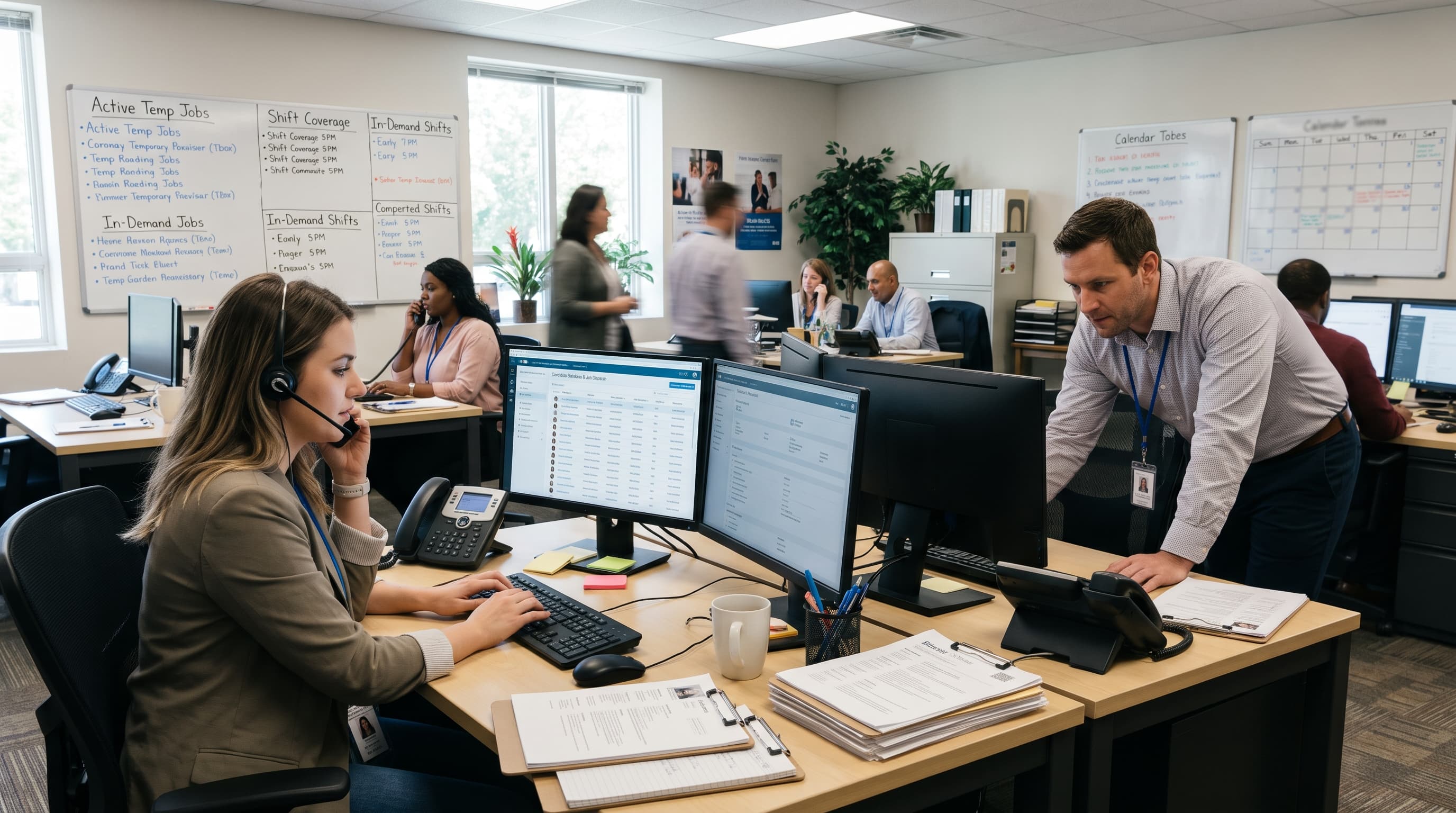
Discover the best payroll software for managing hourly, temporary and shift-based workforces. Compare nine leading platforms and learn how to simplify payroll, improve accuracy and reduce manual administration.
Best Payroll Software for Shift-Based Workers in 2026: 9 Tools Compared
Key Takeaways
- Processing shift-based payroll requires specialized systems capable of handling variable weekly hours, split pay rates, shift differentials, and complex overtime calculations.
- Generic corporate payroll platforms fail for hourly teams because they lack integrated mobile time capture, automated break compliance, and real-time roster syncing.
- Essential features to evaluate include automated timesheet-to-payroll workflows, GPS geofenced clock-ins, multi-site tax handling, and worker self-service pay visibility.
- Ubeya connects live scheduling and geofenced attendance tracking directly to payroll preparation, eliminating manual data entry for high-volume hourly and agency teams.
Running payroll for a salaried office workforce is straightforward, as paychecks rarely change from one pay cycle to the next. In contrast, managing shift-based payroll across restaurants, event venues, logistics hubs, and staffing agencies is an intricate operational challenge. When employee hours fluctuate daily and staff work across different roles or locations, relying on manual timesheet spreadsheets creates severe administrative bottlenecks and costly wage compliance errors.
Adopting dedicated payroll software for shift workers connects schedule creation and mobile time tracking directly to wage calculations, ensuring accurate paychecks and protecting business margins.
Why Payroll Is Harder for Shift-Based Workforces
Hourly and shift-driven businesses face distinct payroll complexities that traditional back-office accounting software is not built to handle:
- Variable Weekly Hours: Shift workers rarely work a fixed 40-hour schedule. Fluctuating demand, last-minute shift swaps, and weather delays mean total hours must be calculated dynamically every pay period.
- Multiple Pay Rates Per Worker: A single employee may work as a banquet server on Friday at one hourly rate and a shift supervisor on Saturday at a higher rate, requiring blended-rate calculations when overtime occurs.
- Shift Differential Pay: Night shifts, weekend coverage, and holiday hours frequently carry mandatory wage premiums that must be applied automatically to specific clock-in windows.
- Complex Overtime and Break Laws: Federal weekly overtime thresholds overlap with state-specific daily overtime rules and mandatory meal break penalties, creating high legal exposure if calculated manually.
- Tip Pooling and Multi-Site Rules: Hospitality and event teams require accurate tip distribution alongside multi-jurisdictional tax tracking when workers deploy across different client venues.
How We Evaluated Payroll Software for Shift Workers
To identify the top platforms for hourly and flexible teams, we evaluated each solution across four operational criteria:
- Pay Rule Automation: The system's ability to calculate overtime, shift differential pay, split rates, and statutory break premiums automatically without manual spreadsheet formulas.
- Time Capture Accuracy: Native mobile clock-ins equipped with GPS geofencing, tablet kiosk modes, and real-time attendance dashboards to prevent time theft and buddy punching.
- Payroll Integrations and Processing: Whether the platform runs full-service payroll natively or exports clean, verified timesheet to payroll data directly into major accounting engines.
- Worker App Experience: A mobile-first interface allowing shift workers to view schedules, confirm hours, track estimated earnings, and download digital payslips easily.
Best Payroll Software for Shift-Based Workers in 2026
We reviewed nine leading platforms that streamline hourly payroll software and shift management for dynamic workforces.
1. Ubeya
Best For: Event companies, hospitality groups, venues, and staffing agencies managing high-volume hourly crews, temp workers, and multi-rate shifts.
Ubeya is an all-in-one workforce management platform engineered specifically for fast-moving, shift-based operations. Rather than separating roster creation from financial reconciliation, Ubeya unifies smart scheduling, GPS time tracking, and payroll preparation inside a single ecosystem. Workers clock in via a native mobile app using geofenced verification or tablet kiosks, capturing exact timestamps tied to specific roles and locations.
Ubeya's automated rules engine applies custom pay rates, overtime thresholds, and shift differentials directly to approved timesheets. Operations managers can review exceptions on a live dashboard before exporting clean, formatted data via Ubeya's payroll platform and accounting integrations. By linking time and attendance tracking directly with employee scheduling, Ubeya eliminates manual spreadsheet reconciliation and cuts payroll processing time drastically.
Limitations: Functions as a comprehensive payroll preparation and export engine that integrates with dedicated tax-filing providers rather than acting as a standalone tax-remittance processor.
2. Workforce.com
Workforce.com is a comprehensive workforce management and payroll platform built for shift-based industries like hospitality, retail, and healthcare. It combines demand-driven scheduling, biometric time clocks, and automated wage compliance into a unified workflow. Its payroll engine processes complex award interpretations, overtime rules, and shift differentials automatically.
Limitations: Initial configuration of complex multi-site compliance rules requires dedicated implementation time.
3. UKG Ready
UKG Ready provides an enterprise human capital management suite combining HR, scheduling, timekeeping, and full-service payroll processing. Designed for mid-to-large organizations, it enforces complex union rules, multi-state tax compliance, and automated accrual tracking across large hourly workforces.
Limitations: The broad enterprise interface carries a steeper learning curve and higher administrative setup for smaller, fast-moving teams.
4. Deputy
Deputy offers intuitive scheduling and time tracking software tailored for retail, hospitality, and service businesses. Its mobile app and facial-recognition tablet kiosks capture accurate attendance data, automatically calculating meal break compliance and overtime premiums before syncing approved timesheets to external payroll providers.
Limitations: Does not offer native, built-in payroll processing, requiring integration with third-party payroll software.
5. 7shifts
7shifts is a team management platform engineered specifically for restaurants, bars, and food service operations. It integrates directly with point-of-sale systems to forecast labor needs, track hourly punches, calculate tip pools, and run integrated restaurant payroll smoothly.
Limitations: Built exclusively for food and beverage environments, making it unsuitable for non-hospitality shift industries.
6. Gusto
Gusto is a popular full-service payroll and HR platform designed for small-to-midsize businesses. It automates federal, state, and local tax filings, supports multiple hourly pay rates, tracks paid time off, and offers built-in time tracking on higher-tier plans.
Limitations: Its scheduling and shift-swapping features are basic compared to dedicated workforce management tools.
7. Homebase
Homebase provides an all-in-one scheduling, time clock, and payroll app tailored for small local businesses and hourly teams. Managers can build schedules, track GPS clock-ins, convert timesheets into direct-deposit payroll runs, and handle tax filings from a single dashboard.
Limitations: Lacks multi-tier agency management and complex enterprise compliance guardrails.
8. Connecteam
Connecteam is a mobile-first deskless workforce app combining shift scheduling, GPS time tracking, and internal team communication. Managers review digital timesheets, approve overtime edits, and export verified hours directly to popular payroll software.
Limitations: Relies on third-party payroll integrations rather than executing direct tax filings natively.
9. When I Work
When I Work offers accessible scheduling and attendance tracking software built for hourly teams. Workers use a mobile app to claim open shifts, trade assignments, and clock in via GPS geofencing, while managers export verified time logs to payroll systems.
Limitations: Requires external payroll software for tax remittance and direct deposit processing.
Payroll for Temp, Event and Agency Staff
Generic hourly payroll software assumes a static relationship between one employer and one W-2 employee. When managing temporary, event, or staffing agency crews, standard tools miss critical operational workflows:
- Per-Event and Per-Client Pay Rates: Temporary workers often earn different hourly rates depending on the client contract, venue location, or specific event role worked that day.
- Simultaneous Pay and Bill Calculations: Agencies must calculate worker gross pay alongside client invoice markups from the exact same timesheet entry.
- Blended W-2 and 1099 Classifications: Flexible workforces frequently combine traditional W-2 temporary staff with 1099 independent contractors, requiring distinct tax documentation and payout rules.
- Fast Pay for One-Off Shifts: Casual event workers expect rapid turnaround on wage disbursements rather than waiting weeks for standard bi-weekly corporate pay cycles.
How to Choose the Right Payroll Software for Your Shift Workforce
Matching a platform to your operational model prevents operational friction and administrative roadblocks:
- Restaurants and Cafes: Choose food-service platforms like 7shifts or Homebase that connect point-of-sale data directly with tip pooling and hourly payroll.
- Event Venues and Catering Groups: Select mobile-first platforms like Ubeya that handle variable event call times, geofenced off-site clock-ins, and multi-rate shift tracking.
- Temporary Staffing Agencies: Prioritize end-to-end systems like Ubeya that link candidate onboarding and mobile shift dispatch directly with simultaneous pay-and-bill reconciliation.
- Multi-Site Enterprise Employers: Opt for robust platforms like UKG Ready or Workforce.com that enforce complex regional labor laws and union rules across multiple branches.