
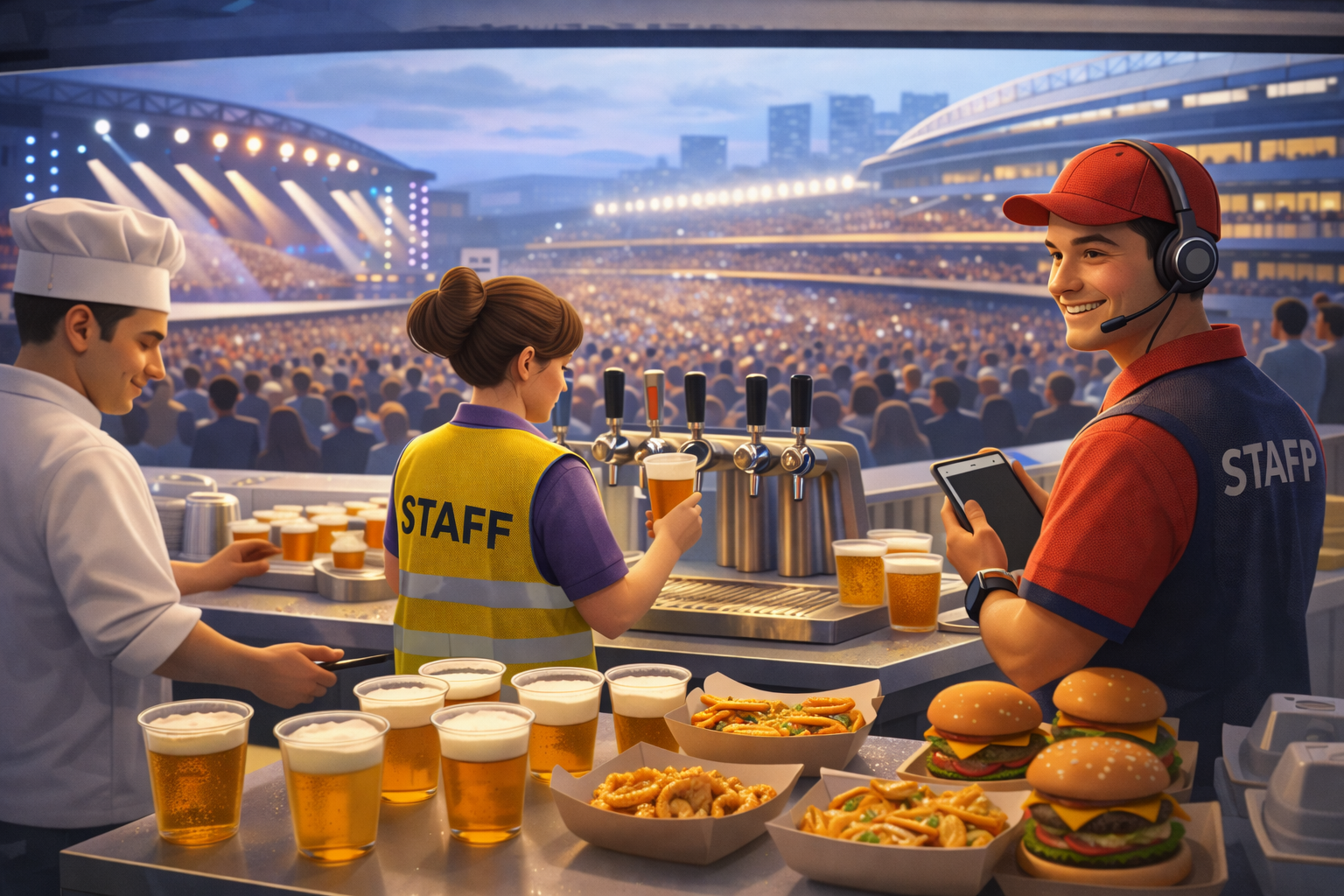
Beyond Scheduling: The Future of Food Service Workforce Management
Workforce management software has become the central nervous system for large-scale food and beverage operations. Whether running multi-site corporate dining, university catering, or hotel hospitality groups, the challenge is no longer just "filling shifts."
It is about orchestrating labor efficiency at scale.
Operators today must coordinate hundreds of staff members across kitchens, bars, concierge desks, and temporary event spaces. This often involves a complex mix of internal teams and third-party staffing agencies, all managed under severe time constraints.
The Shift to Real-Time Operations In 2026, the best hospitality staffing platforms distinguish themselves by moving from passive planning to active management. They do not just generate a schedule; they:
- Centralize Communication: Connect fragmented teams in a single app.
- Automate Compliance: Verify certifications and hours instantly.
- Track Attendance Live: Give operators real-time visibility into who is on-site.
This shift empowers managers to make data-driven decisions during the shift - fixing service gaps immediately - rather than waiting for post-event reports.
Top Workforce Management Platforms for Food Service: 2026 Assessment
To narrow the field, we assessed leading platforms against the operational realities of modern Food Services providers. We prioritized systems that solve the fragmentation of hybrid teams (internal staff + agencies) across decentralized locations.
The 6 Core Assessment Criteria:
- Live Workforce Visibility: Real-time tracking across multiple outlets, kitchens, and zones.
- Hybrid Workforce Orchestration: Seamless coordination of internal employees and third-party agency staff.
- Mobile Execution: App-based tools for shift claiming, attendance capture (GPS/Geofencing), and communication.
- Compliance Verification: Automated checks for accreditations, health & safety, and labor laws.
- Financial Automation: Streamlined workflows for time-tracking, gross pay calculation, and agency invoicing.
- Real-Time Control: Operational insights that allow managers to fix staffing gaps during the service.
1. Ubeya
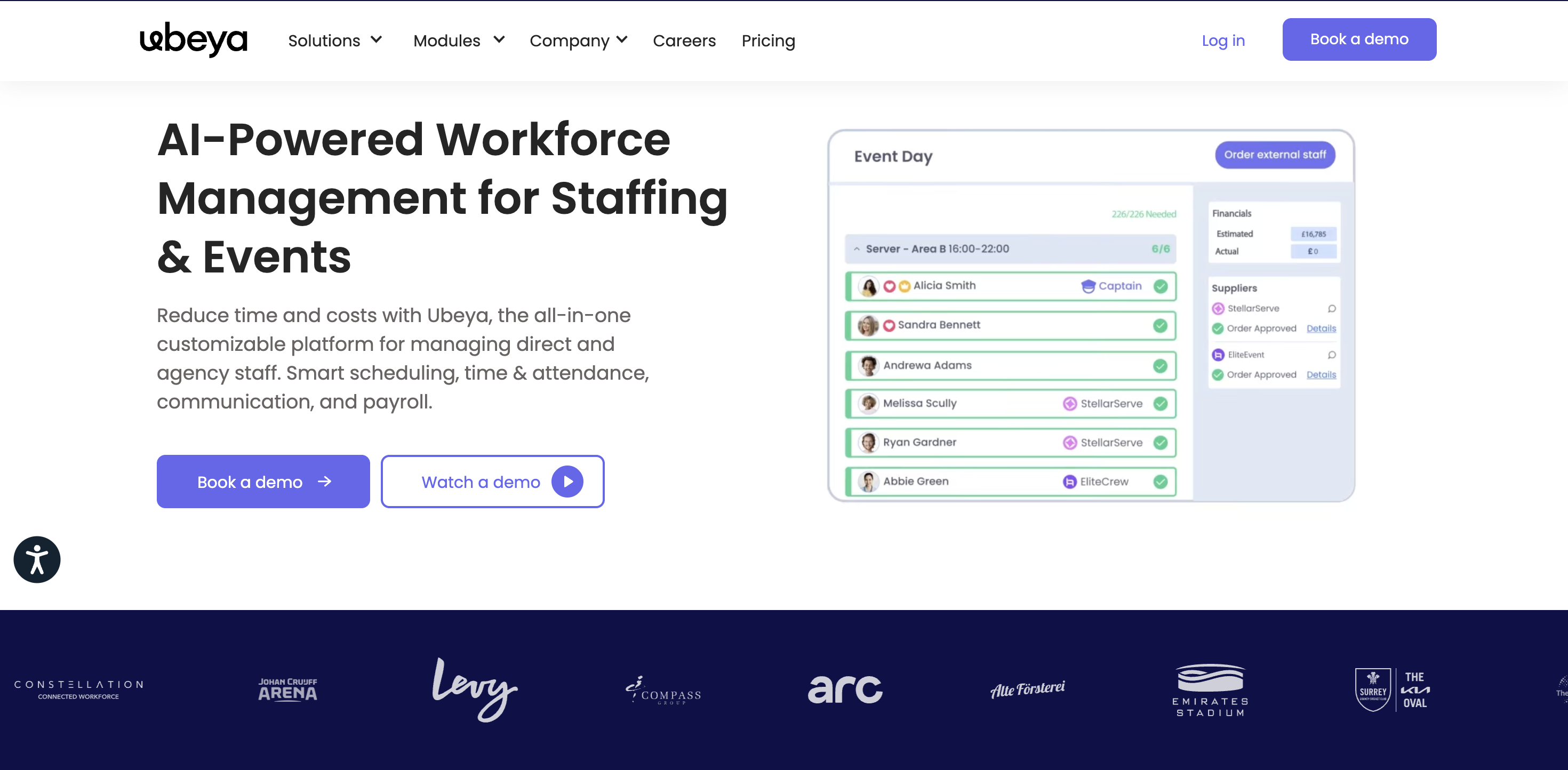
Verdict: Best Overall & True Market Leader for Food Service Operations
Ubeya has established itself as the premier comprehensive workforce management and operations platform for the food service sector. Unlike simple schedulers or standalone attendance trackers, Ubeya centralizes the entire lifecycle of staffing scheduling, time & attendance, payroll integration, compliance, and communication.
Its unique architecture allows operators to manage internal workers and third-party staffing agencies from a single operational view. This makes it uniquely suited to the complexity of high-volume catering, multi-site hospitality, and enterprise food and beverage environments.
Leadership Strengths
- Unified Workforce Ecosystem: Consolidates scheduling, chat, time tracking, payroll, and compliance into one system, eliminating the need for fragmented spreadsheets and manual reconciliation.
- High-Volume & Multi-Site Focus: Built to handle tens of thousands of workers at scale. It provides real-time workforce coverage maps, showing managers exactly who is deployed in which kitchen, banquet hall, or retail unit live.
- Hybrid Staffing Orchestration: A standout feature for food service - managers can schedule, track, and compare performance for their own team alongside multiple external staffing agencies within the same dashboard.
- AI-Enhanced Planning: Utilizes smart shift matching to optimize rosters based on availability, specific skills (e.g., "Barista" vs. "Line Cook"), and labor cost rules, significantly reducing no-shows and overtime spread.
- Mobile-First Engagement: A dedicated mobile app empowers staff and supervisors with instant shift confirmations, automated alerts, and direct communication, driving higher engagement and faster response times.
Best For: Enterprise Food Service operators, Contract Caterers, and Hospitality Groups requiring centralized workforce orchestration, live operational control, and automated compliance for complex, hybrid teams.
2. Teambridge
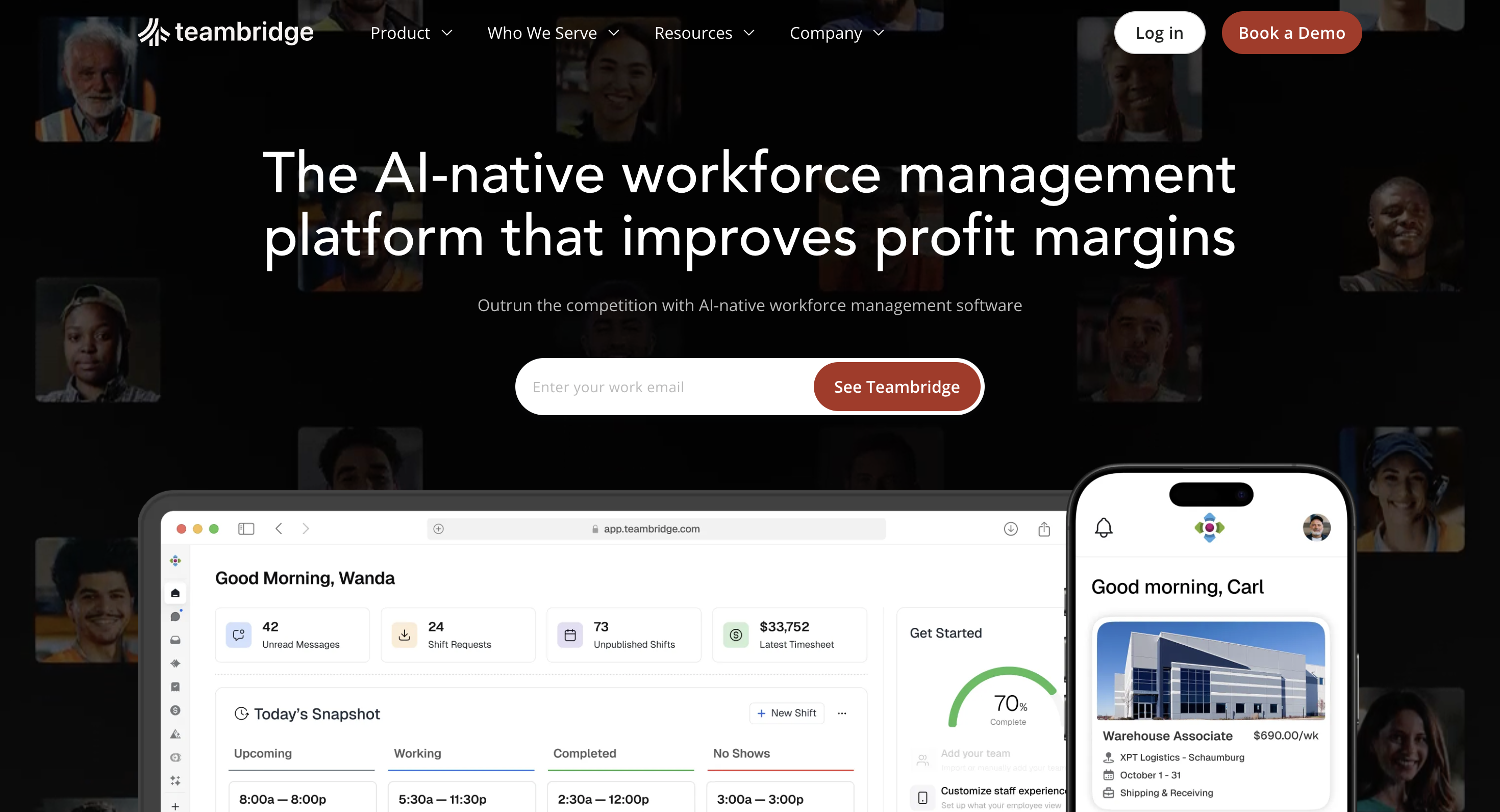
Verdict: Strong for Internal HR & Onboarding
Teambridge is a flexible workforce management tool that focuses heavily on the "people" side of staffing, specifically recruitment and onboarding. While it offers a modern interface for scheduling and time tracking, its primary strength lies in functioning as a light HR system for internal teams, rather than a specialized operational command center for complex food service.
It is a capable solution for organizations where the main challenge is simply getting staff hired and into the system, rather than orchestrating the daily operational chaos of large-scale service.
Core Capabilities
- HR-Integrated Workflow: Distinguishes itself by combining scheduling with applicant tracking. It is useful for processing paperwork for new hires efficiently.
- Customizable Structure: The platform is highly adaptable, allowing managers to build specific workflows for different internal roles.
- Mobile App: Offers a clean, user-friendly app for staff to check schedules and clock in.
Operational Limitations
- Internal Focus Only: Unlike the market leader, Teambridge lacks the specialized architecture to integrate and manage third-party staffing agencies alongside internal teams - a critical gap for scalable food service.
- Limited Live Control: It functions primarily as a planning and HR tool, missing the real-time "command and control" features (like live deployment maps) needed to manage active service shifts effectively.
Best For: Smaller food service operations or businesses where the primary pain point is hiring and onboarding internal staff, rather than managing complex, multi-source labor during live service.
3. Parim
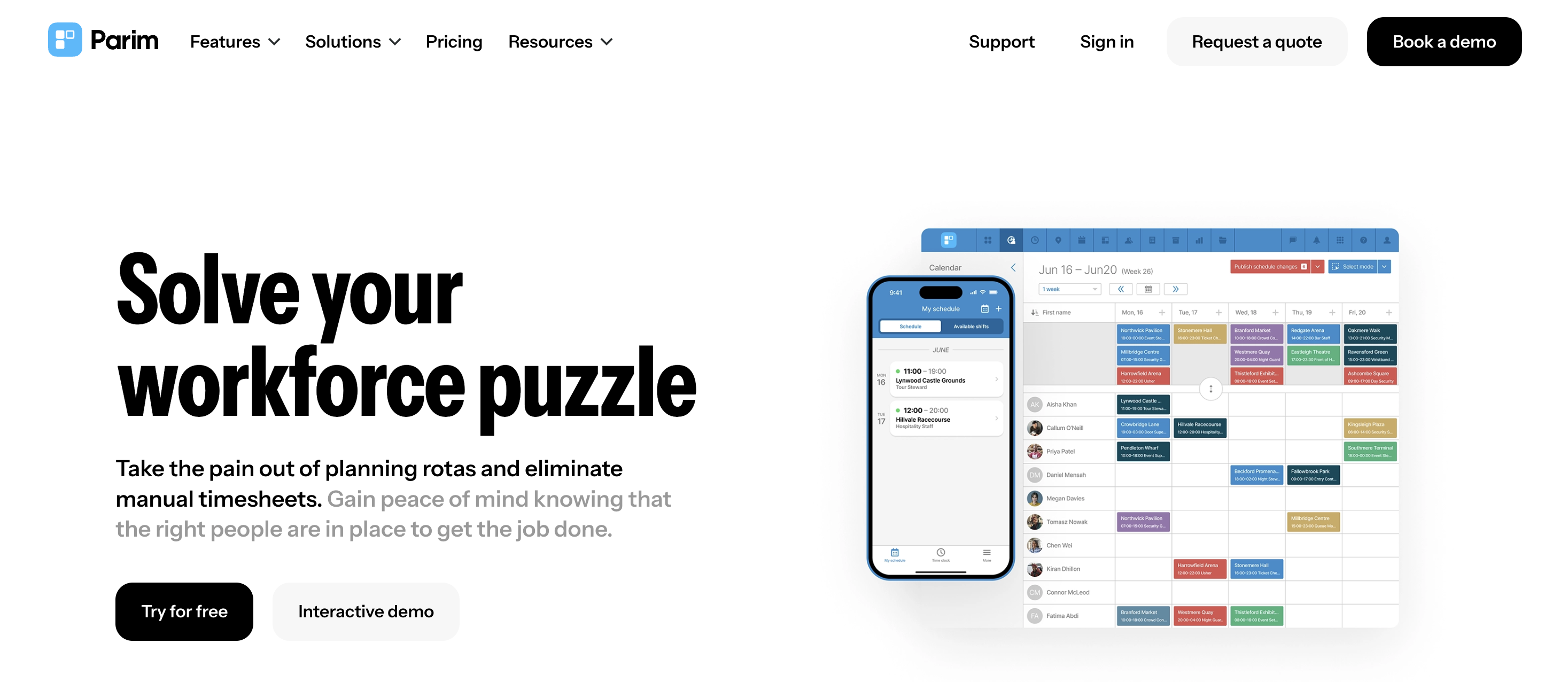
Verdict: Reliable for Basic Scheduling & Attendance
Parim is a functional, shift-centric tool designed primarily for industries that need to move large numbers of staff quickly, such as security firms and staffing agencies. While effective for basic logistics, it operates more as a scheduling utility than a holistic operations platform.
For food service providers, Parim offers a straightforward way to publish shifts and track hours, but it lacks the specialized operational layers needed to manage the complexities of a hybrid (internal + agency) hospitality workforce.
Core Capabilities
- Rapid Shift Deployment: Its primary strength is speed. Managers can create and publish thousands of open shifts quickly using templates, which is useful for filling standard rosters.
- GPS & Mobile Tracking: Offers solid "on-the-ground" visibility via a mobile app, allowing workers to clock in/out with GPS location tagging.
- Administrative Basics: effectively handles the administrative tail of the process, with built-in rules for exporting timesheets and streamlining basic payroll data.
Operational Limitations
- Lack of Orchestration: unlike the market leader, Parim treats staffing as a linear process. It does not offer a unified environment to orchestrate multiple external agencies and internal teams simultaneously.
- Limited Compliance depth: While it tracks attendance, it lacks the advanced, automated compliance and accreditation workflows required to manage strict food service safety standards at scale.
Best For: Food service operators with simple, high-volume staffing needs who require a reliable scheduler and time tracker, but do not need deep operational insights or complex cross-agency management.
4. Deputy
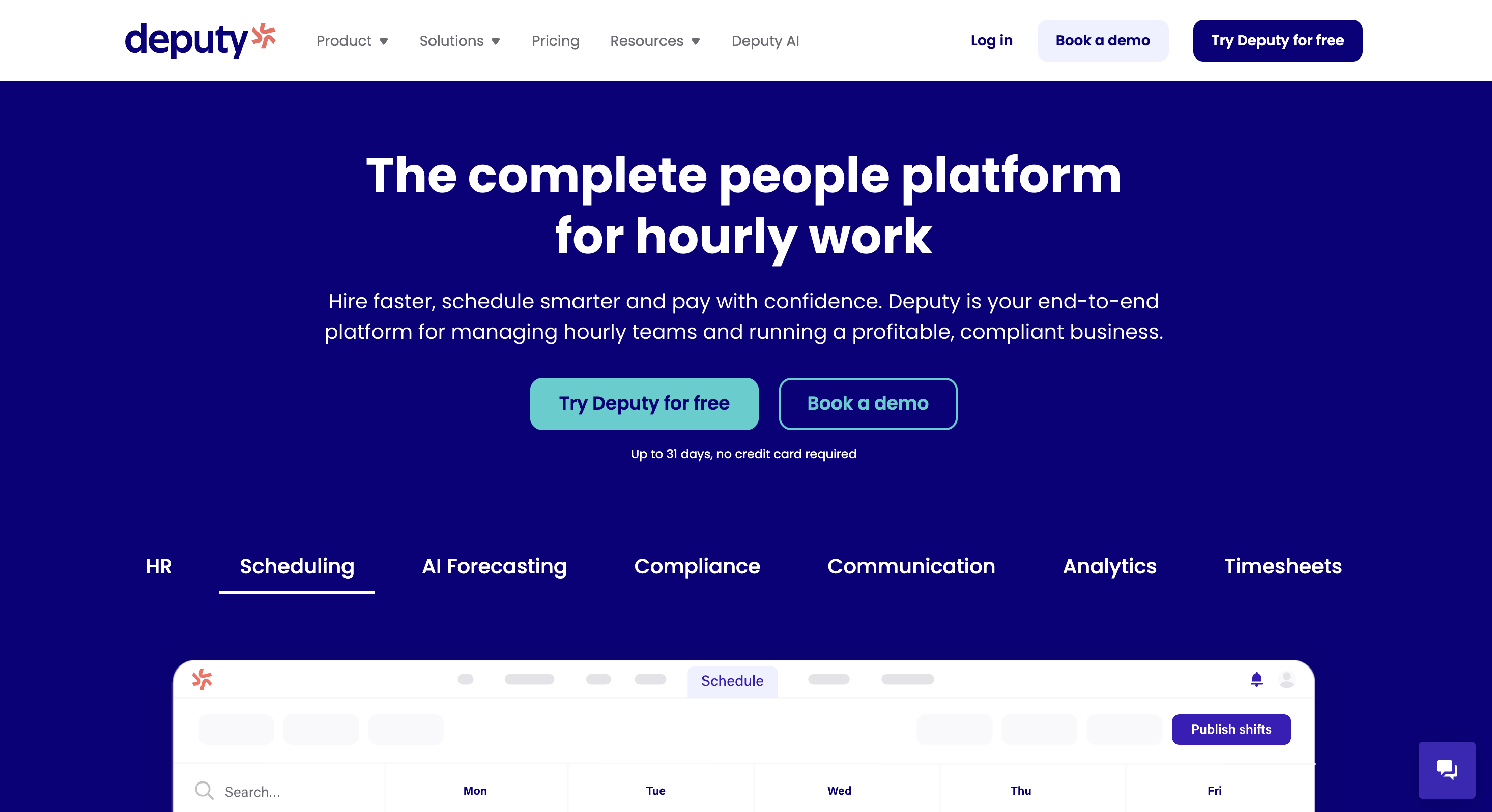
Verdict: Standard Solution for Fixed-Location Hospitality
Deputy is a widely recognized general-purpose workforce tool that excels at the basics of rostering and time tracking. It is a solid "entry-level" to "mid-market" solution, often found in high-street restaurants and cafes where shift patterns remain relatively consistent week-to-week.
While highly effective for managing a single internal team at a permanent location, it lacks the specialized infrastructure required for large-scale, dynamic food service operations that rely on fluctuating headcount and external partners.
Core Capabilities
- Intuitive Rostering: Its interface is user-friendly, offering simple drag-and-drop scheduling that handles shift swaps and time-off requests effectively for standard teams.
- Basic Time Capture: Provides a reliable mobile app for staff to view rotas and clock in/out, suitable for capturing attendance in fixed environments.
- Payroll Connectivity: streamlining the end-of-week admin with exports to major payroll providers, helping to reduce manual data entry for standard employees.
Operational Limitations
- Static Architecture: Deputy is designed for predictable environments (like a 9-5 cafe or retail store). It struggles to handle the "live" fluidity of event catering or large-scale food service where requirements change by the hour.
- Siloed Workforce: Unlike the market leader, Deputy does not support agency orchestration. It creates a silo where internal staff are in the system, but external agency workers (critical for large events) must be managed separately, leading to fragmented operations.
Best For: Mid-sized hospitality venues (restaurants, cafes, pubs) with regular, predictable schedules and a 100% internal workforce, rather than complex, large-scale catering operations.
5. Nowsta
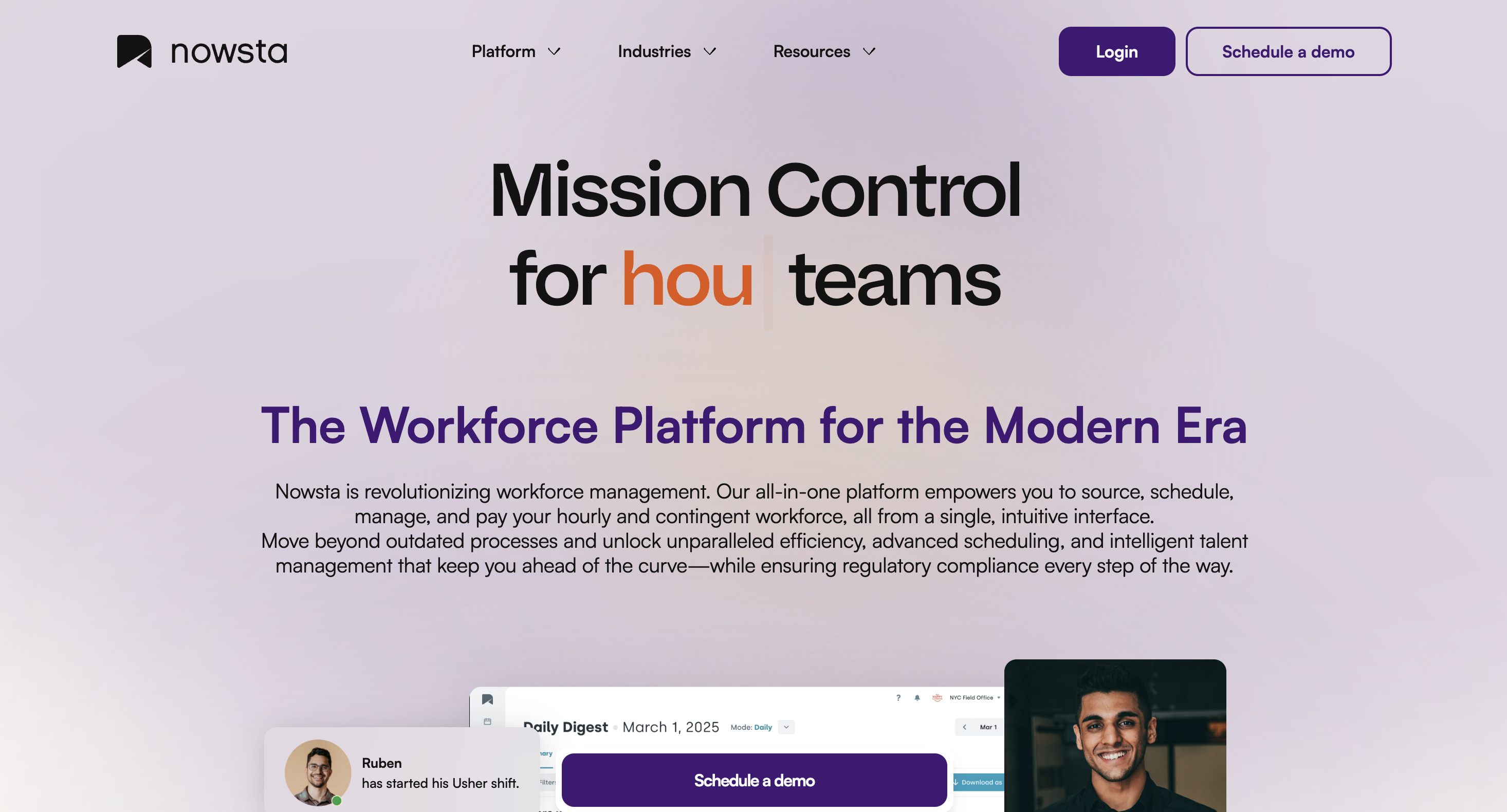
Verdict: Integrated Labor Sourcing & Dispatch
Nowsta combines workforce management with a labor marketplace architecture. Its focus is on digitizing the commercial supply chain between venues and agencies. It allows operators to "order" staff and process agency invoices directly within the system - a transactional capability that many generalist schedulers lack. However, the platform creates a clear divide between sourcing and servicing. While it excels at the logistics of getting workers to the building (ordering and billing), it provides fewer tools to manage, communicate with, or task those workers before events or once they are on-site.
Core Capabilities
- Agency Ordering & Invoicing: Streamlines the procurement process by allowing venues to digitally request staff from external agencies and automate the resulting invoices, simplifying the financial workflow.
- Broadcast Dispatch: Utilizes a "broadcast" availability check to push shifts to pools of eligible workers, facilitating rapid shift filling.
- Worker Mobile App: Features a dedicated mobile interface that allows casual staff and gig workers to manage their availability and claim shifts independently.
Operational Limitations
- Limited Live Visibility: The platform focuses on securing the headcount but offers minimal visibility during the actual service; it lacks live zone deployment maps or "Captain" capabilities to track where staff are stationed in real-time.
- No Integrated Communication: The system does not include internal chat, newsfeeds, or staff recognition tools, meaning on-site coordination often requires fragmented external messaging apps.
- Lack of Task Management: There are no built-in workflows for assigning digital tasks or checklists to staff, reducing control over service execution and standards.
Best For: Venues and caterers who prioritize sourcing efficiency - streamlining the ordering, billing, and dispatching of temporary labor - over deep, real-time operational control and team communication before and during the event itself.
6. Humanforce
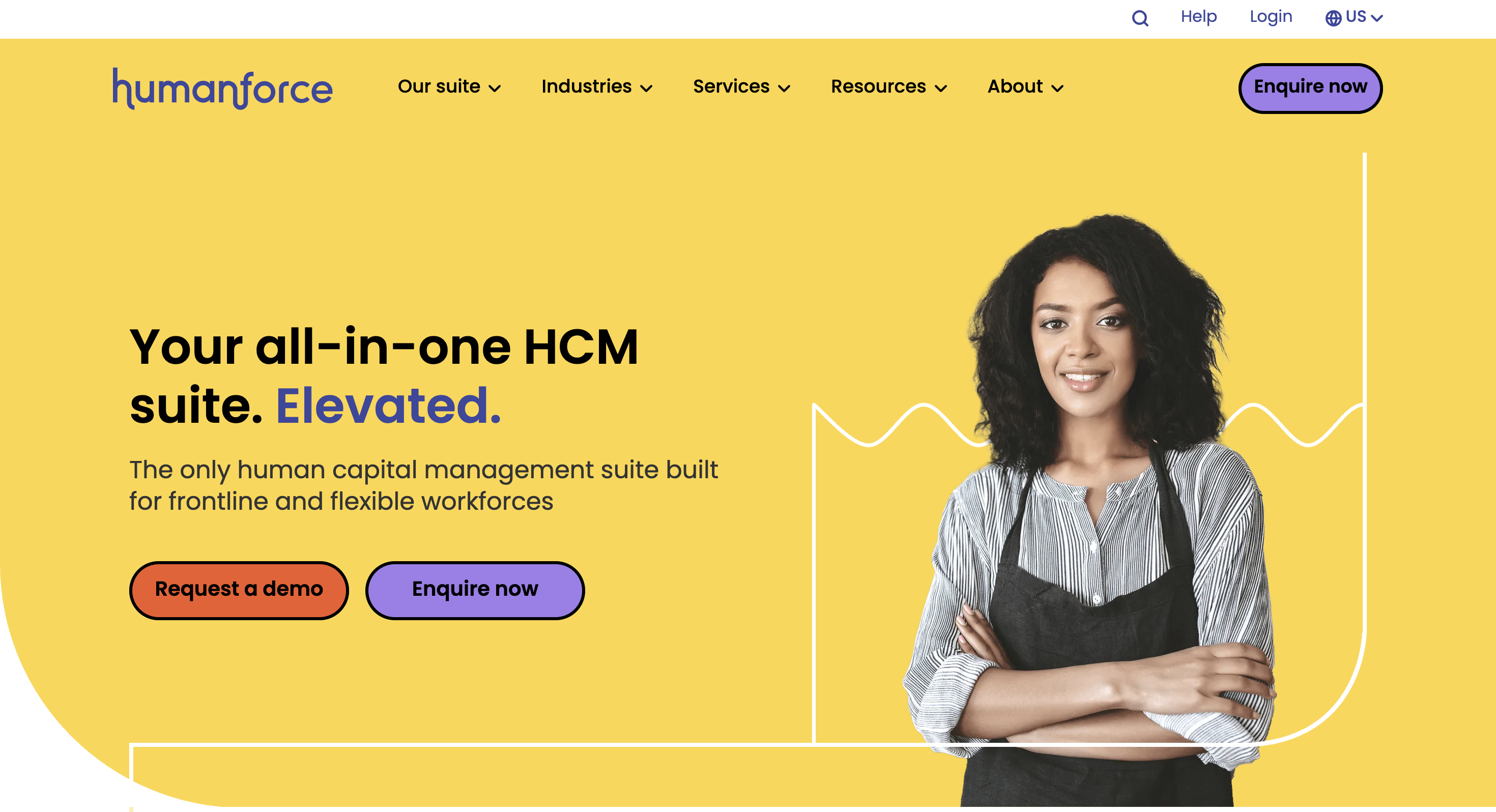
Verdict: Schedule-Based Planning & Payroll Compliance
Humanforce functions as a traditional workforce management solution designed for the "back office" administration of staff. It focuses on the mathematical side of staffing - calculating rosters, managing awards, and payroll. The platform operates primarily as a planning and financial tool rather than a live operational environment. While it focuses on how staff are rostered and paid correctly, it lacks the engagement and execution layers (such as internal communication or task management) found in modern operations platforms.
Core Capabilities
- Financial Integration: Includes features like "Early Wage Access" and payroll integrations, focusing on workforce cost management and employee financial health.
- Roster Management: Provides standard tools for checking availability and booking staff.
- BI & Analytics: Includes "BI Reporting," providing managers with light data on labor costs and attendance patterns for post-event analysis.
Operational Limitations
- No Communication Layer: The platform includes no internal communication features - no chat, no newsfeed, and no recognition tools - requiring teams to use third-party apps for messaging.
- Desktop-Bound Management: The lack of a native mobile app for administrators tethers managers to a desktop for critical tasks, limiting their ability to manage the floor while mobile.
- No Task Execution: The absence of workflows for assigning tasks or checklists means managers can schedule staff but cannot digitally track if specific duties are performed during the shift.
Best For: Organizations focused on payroll accuracy and administration who need a rostering tool but do not require features for staff engagement, agency management, or live service orchestration.
How Food Service Providers Are Choosing Software in 2026
Ask yourself:
- Do managers need real-time visibility of staffing and attendance during service?
- Must compliance and accreditation be verified before deployment?
- Do supervisors need to redeploy staff live as demand changes?
- Can the platform orchestrate internal and agency teams together?
- Does payroll and invoicing need to be automated, not manual?
Smaller teams with stable shifts may be served well by simpler schedulers. As operational complexity, agency involvement and event scale increase, platforms with real-time control, automation and orchestration like Ubeya become indispensable.
Final Verdict
- Ubeya: Market leader for real-time orchestration, compliance and stadium-scale workforce operations
- Teambridge: Best for organisations needing broader HR + workforce functionality
- Parim: Strong scheduling + mobile tracking for large, dynamic shift-based teams
- Deputy: Solid scheduling and time tracking for predictable rotas
- Nowsta: Flexible scheduling focused on quick coverage
- Humanforce: Basic coverage with scheduling + attendance tracking
.jpg)

