
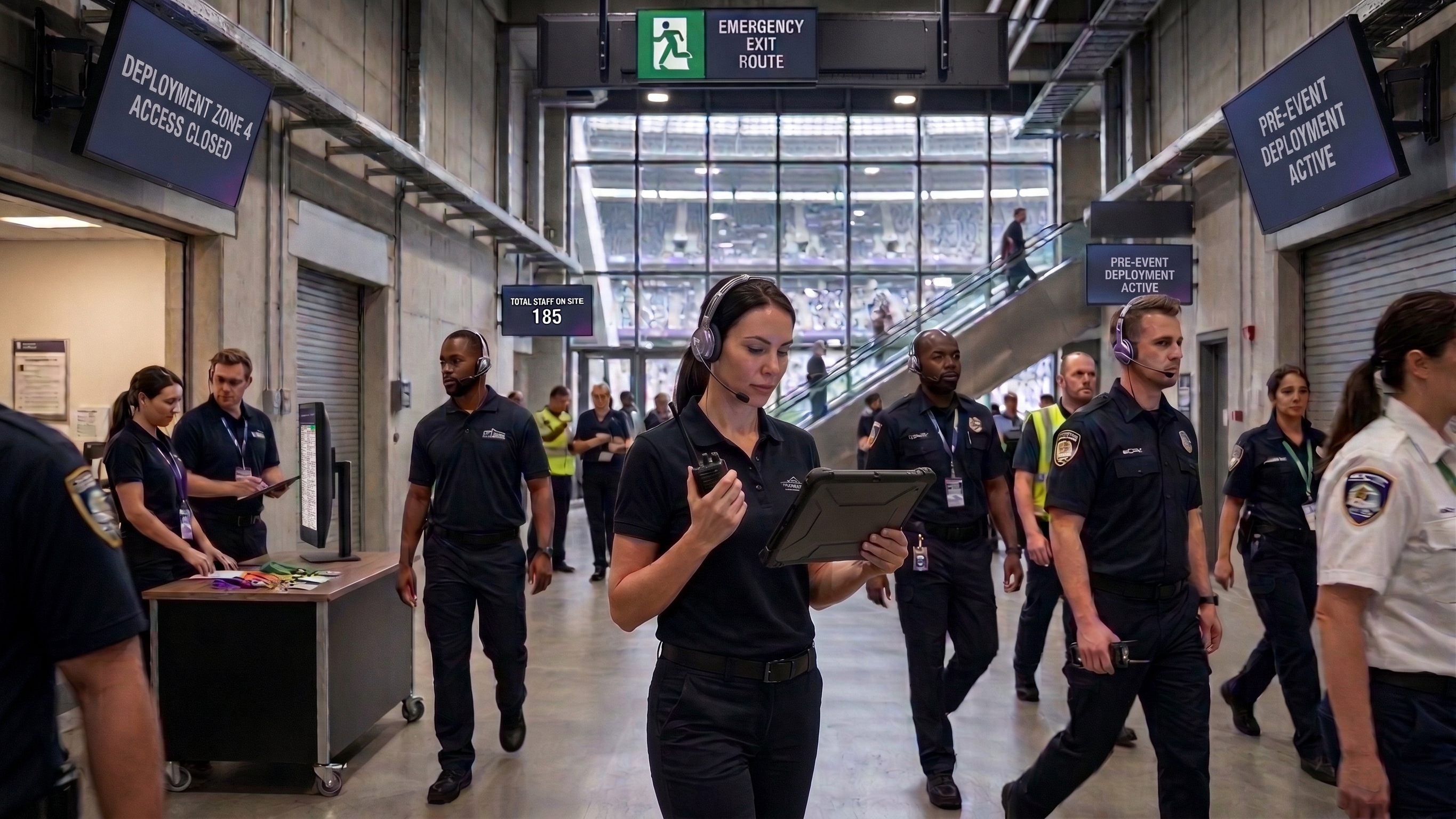
Why Flexible Workforce Management Is Essential for Event Operations
Key Takeaways
- Event businesses need staffing models that can quickly scale up or down based on fluctuating demand.
- Technology-driven scheduling and communication tools reduce administrative overhead and improve operational efficiency.
- Flexible workforce strategies help event operators control labor costs while improving staff responsiveness and coverage.
Event operations depend on speed, adaptability, and precise coordination. Staffing needs can shift quickly based on ticket sales, venue changes, weather conditions, or last-minute client requests. For event companies managing temporary teams across multiple locations, rigid staffing structures often create unnecessary costs and operational delays. That is why flexible workforce management has become essential for modern event operations.
What Is Flexible Workforce Management in Event Operations?
In the events industry, workforce requirements are constantly changing. One week may involve a small corporate event, while the next requires hundreds of workers for a festival or sporting event. Traditional staffing models struggle to handle this level of variability efficiently.
Flexible workforce management refers to the ability to build and coordinate teams that can adapt to changing operational demands. Instead of relying entirely on fixed full-time employees, event companies create staffing structures that combine permanent staff, freelancers, temporary workers, and on-demand talent pools.
This approach gives event operators greater agility when managing:
- Seasonal event peaks
- Last-minute staffing requests
- Multi-location operations
- Specialized event roles
- Variable attendance volumes
Unlike traditional staffing models where schedules are often fixed weeks in advance, flexible operations allow managers to adjust assignments in real time. Workers can take shifts based on availability, qualifications, and proximity to venues, helping businesses respond faster to operational changes.
For event businesses handling large staffing volumes, flexibility is no longer optional. Many companies refining their event staffing strategies are moving toward more dynamic workforce structures that support scalability and operational responsiveness.
Why Event Operations Are Uniquely Suited to Flexible Staffing
Few industries experience workforce volatility quite like events. Staffing demand is inherently unpredictable, making static workforce models difficult to sustain.
Several factors make flexible staffing particularly important in event operations.
Unpredictable Demand
Attendance levels can fluctuate significantly even after planning has begun. Ticket sales, weather conditions, speaker availability, or venue changes may all affect workforce requirements.
Event operators often need to:
- Add additional security staff
- Expand hospitality teams
- Increase transportation coordinators
- Fill emergency replacement roles
Rigid staffing models cannot react quickly enough to these operational shifts.
Seasonal Peaks and Short-Term Projects
Many event companies experience major demand spikes during certain seasons. Festivals, holiday events, sports tournaments, and conference cycles create temporary surges that do not justify maintaining large full-time teams year-round.
A flexible workforce structure allows companies to scale resources based on project volume without permanently increasing labor costs.
Multi-Role Workforce Requirements
Event workers frequently perform different roles across different events. A staff member may work registration at one venue and hospitality support at another later in the week.
This multi-role environment requires systems capable of tracking:
- Certifications
- Skill sets
- Availability
- Shift preferences
- Venue assignments
Traditional spreadsheets and manual scheduling processes often become difficult to manage at scale.
Geographic Workforce Distribution
Large event companies may coordinate staff across cities, regions, or even countries. Managing distributed teams requires rapid communication and centralized visibility into workforce availability.
This is where workforce flexibility becomes a competitive advantage. Businesses that can mobilize workers quickly are better equipped to handle complex event logistics while maintaining service standards.
Key Benefits of Flexible Workforce Management for Event Teams
Adopting a flexible staffing strategy offers operational and financial advantages that directly impact event performance.
Better Cost Control
Labor is one of the largest expenses in event operations. Overstaffing increases unnecessary costs, while understaffing risks operational failures and poor attendee experiences.
A flexible staffing approach helps businesses align labor costs with actual demand. Managers can schedule workers only when needed and adjust staffing levels as event requirements evolve.
This creates:
- Reduced overtime expenses
- Lower idle labor costs
- Improved budget forecasting
- More efficient resource allocation
Faster Fill Rates
Event staffing gaps often need immediate resolution. Whether due to cancellations, no-shows, or expanded event requirements, operators must fill open shifts quickly.
With centralized workforce platforms and mobile scheduling tools, managers can instantly notify qualified staff members about available opportunities.
This improves fill rates while reducing time spent on manual outreach.
Improved Scalability
As event companies grow, workforce coordination becomes increasingly complex. Managing hundreds or thousands of temporary workers manually can create operational strain.
Flexible workforce models support scalability by standardizing scheduling, communication, onboarding, and compliance processes across large worker pools.
Businesses can expand operations without proportionally increasing administrative workload.
Reduced Administrative Burden
Manual workforce coordination often consumes significant management time. Managers may spend hours handling:
- Schedule updates
- Availability tracking
- Shift confirmations
- Payroll adjustments
- Staff communication
Automated workforce systems reduce repetitive administrative tasks and improve operational efficiency.
Companies using workforce management software often gain greater visibility into staffing trends, worker performance, and scheduling efficiency, helping managers make faster operational decisions during busy event periods.
Stronger Worker Engagement
Flexible scheduling can also improve worker satisfaction. Temporary and freelance staff increasingly expect mobile-first experiences that allow them to:
- Select preferred shifts
- Manage availability
- Receive real-time updates
- Access payment information
- Communicate directly with managers
When workers have greater control and visibility, engagement and retention often improve.
Common Challenges of Managing a Flexible Event Workforce
While workforce flexibility offers major benefits, it also introduces operational challenges when not properly managed.
Communication Breakdowns
Event staffing environments move quickly. Shift updates, venue instructions, and operational changes must reach workers immediately.
Without centralized communication systems, important updates may be missed, leading to confusion, delays, or staffing errors.
Disconnected communication channels can result in:
- Missed shifts
- Incorrect assignments
- Delayed responses
- Reduced accountability
No-Shows and Last-Minute Changes
Temporary staffing environments naturally experience higher levels of schedule volatility. Workers may cancel at short notice or fail to appear entirely.
Without real-time visibility into staffing coverage, managers may struggle to identify gaps before they affect event operations.
Compliance Risks
Event operators must often manage workers with varying certifications, labor restrictions, and contract requirements.
Tracking compliance manually becomes increasingly difficult as workforce size grows.
Potential risks include:
- Expired certifications
- Incorrect break management
- Overtime violations
- Missing onboarding documentation
- Payroll inaccuracies
These issues can create both financial and reputational consequences.
Scheduling Complexity
Managing multi-role teams across multiple venues requires significant coordination. Managers need visibility into worker qualifications, availability, travel logistics, and scheduling conflicts simultaneously.
Spreadsheets and disconnected systems rarely provide the level of operational oversight required for large-scale event coordination.
Maintaining Consistent Service Quality
One of the biggest concerns with temporary staffing models is maintaining consistency across events.
Event companies must ensure that flexible workers still understand:
- Brand expectations
- Operational procedures
- Customer service standards
- Venue protocols
Without structured onboarding and communication systems, service quality may become inconsistent across teams.
How Technology Enables Flexible Workforce Management at Scale
Technology plays a central role in making flexible workforce solutions operationally sustainable.
Modern workforce management platforms help event companies coordinate large temporary workforces without overwhelming managers or staff.
Centralized Scheduling
Digital scheduling systems allow managers to assign shifts based on:
- Skills
- Certifications
- Availability
- Location
- Worker ratings
Schedules can be updated instantly, helping operators respond faster to staffing changes.
Real-Time Communication
Mobile communication tools ensure workers receive immediate updates about:
- Shift changes
- Venue instructions
- Arrival requirements
- Emergency updates
This reduces confusion and improves operational coordination during live events.
Workforce Visibility
Centralized dashboards give managers visibility into staffing coverage, attendance, and workforce activity across multiple locations.
This helps event operators identify staffing gaps before they affect execution.
Automated Compliance Tracking
Workforce platforms can automatically track certifications, labor limits, and required documentation.
Automation reduces manual oversight while helping businesses stay compliant with labor regulations and client requirements.
Integrated Payroll and Time Tracking
Managing payroll for large temporary teams can become highly time-consuming.
Integrated workforce systems streamline:
- Clock-ins and attendance
- Timesheet approvals
- Payroll calculations
- Payment processing
This improves accuracy while reducing administrative workload.
Businesses focused on long-term scalability often combine flexible staffing with structured workforce planning processes that improve operational resilience and resource allocation during periods of fluctuating demand.
How Ubeya Supports Flexible Workforce Management for Events
Event businesses require more than basic scheduling software. They need workforce systems specifically designed for dynamic, high-volume staffing environments.
Ubeya helps event operators manage every stage of event workforce management through a centralized workforce management platform.
Key capabilities include:
- Mobile-first staff scheduling
- Real-time shift management
- Instant team communication
- Time and attendance tracking
- Automated payroll workflows
- Compliance management
- Workforce analytics and reporting
The platform allows event companies to coordinate large pools of temporary staff while maintaining operational visibility and control.
Because event environments change rapidly, managers need the ability to react immediately to staffing adjustments. Ubeya’s real-time workforce tools help operators fill open shifts quickly, reduce no-shows, and improve workforce responsiveness.
For businesses managing recurring events, seasonal peaks, or multi-location operations, centralized workforce coordination becomes essential for maintaining efficiency and consistency at scale.
FAQ
What is flexible workforce management and how does it differ from traditional staffing?
Flexible workforce management allows businesses to scale staffing levels based on operational demand instead of relying entirely on fixed employee schedules. In event operations, this often includes temporary staff, freelancers, contractors, and on-demand workers. Traditional staffing models are generally less adaptable and may struggle during periods of fluctuating demand, while flexible workforce structures allow event operators to respond quickly to scheduling changes, staffing shortages, and varying event sizes.
How do event operators manage last-minute staffing changes with a flexible workforce?
Event operators typically manage last-minute staffing changes using centralized scheduling and communication platforms that provide real-time workforce visibility. Managers can quickly identify available workers, send shift notifications instantly, and fill staffing gaps before they affect event operations. Mobile workforce tools also help reduce delays by allowing staff to confirm availability, receive updates, and access venue instructions directly through a single platform.
What technology is needed to manage a flexible event workforce effectively?
Managing a flexible event workforce effectively usually requires scheduling software, mobile communication tools, workforce analytics, time tracking systems, payroll integration, and compliance management capabilities. These systems help event operators coordinate large temporary workforces while reducing manual administration. Centralized workforce platforms also improve operational visibility, making it easier to monitor attendance, staffing coverage, certifications, and scheduling conflicts across multiple events or venues.
How do companies maintain quality and consistency with flexible event staff?
Companies maintain consistency by implementing structured onboarding, standardized training processes, and clear communication protocols across all event teams. Workforce management platforms also help managers track worker certifications, previous performance, attendance history, and role experience. By maintaining centralized records and standardized operational procedures, businesses can assign qualified workers to appropriate roles while ensuring service quality remains consistent across different events and locations.
.jpg)

