
8 Best Ways to Fill Open Shifts Fast on Event Day
Key Takeaways
- Unfilled open shifts on event day create operational chaos, severe staff burnout, and immediate dips in customer satisfaction.
- Automated mobile dispatching and real-time push notifications are essential for securing last minute staffing when unexpected vacancies occur.
- Building a pre-vetted standby bench and implementing instant automated re-confirmations prevents open shifts from falling through right before gates open.
- Modern workforce management software connects shift coverage workflows with automated compliance checks to ensure fast, qualified shift fulfillment.
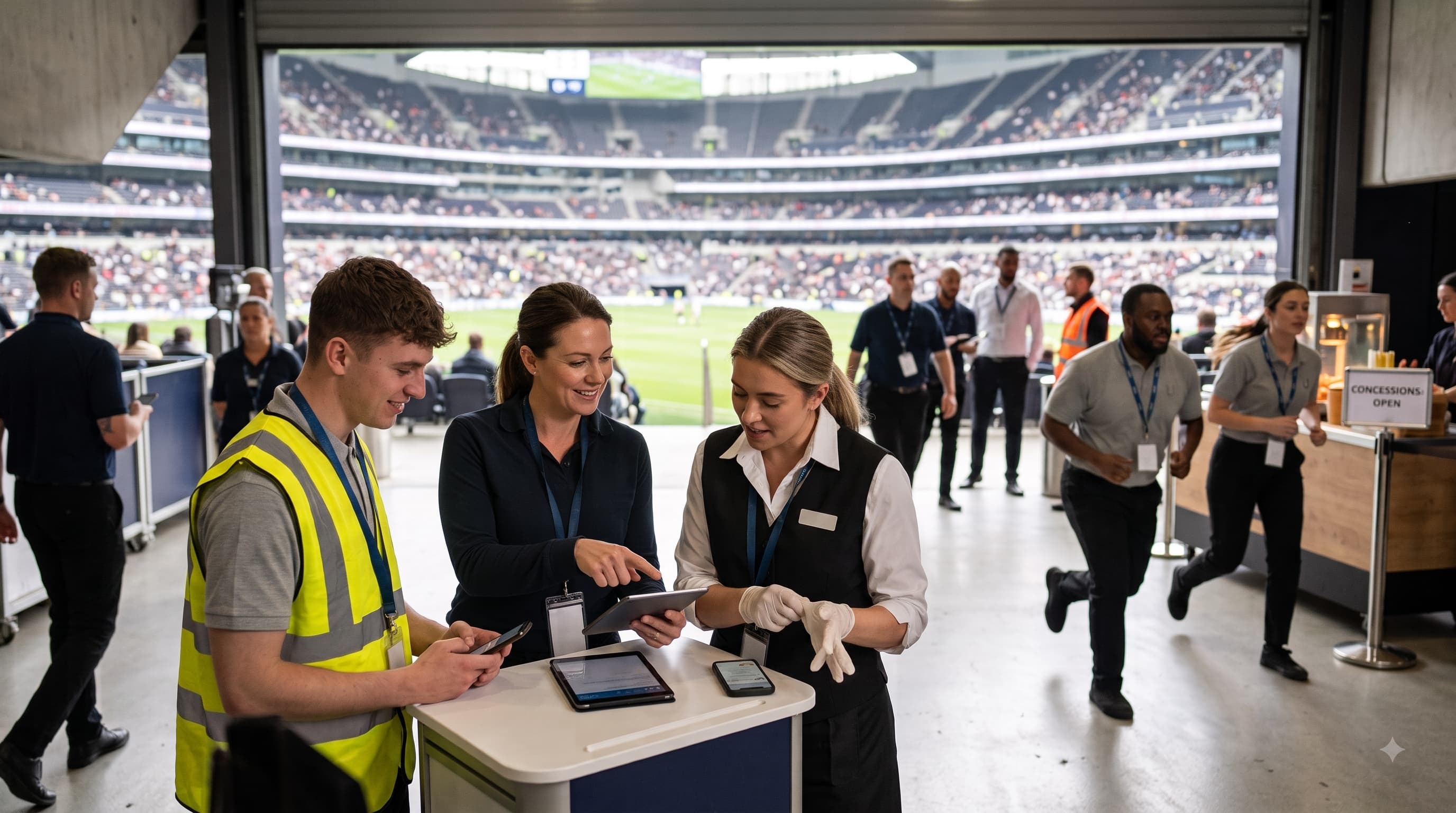
Event day operations represent a high-stakes environment where timing is everything. When doors open at a stadium, convention center, or festival venue, guest arrivals spike rapidly. A single missing bartender, ticket scanner, or security guard creates an immediate bottleneck that cascades across the entire site. Managing last minute staffing gaps through chaotic phone trees or manual text chains drains coordinator time and leaves critical positions unstaffed.
Securing rapid shift coverage requires structured, automated operational workflows. Deploying modern dispatch tools and maintaining an active worker pool allows event directors to fill open shifts in minutes, keeping operations smooth and revenue intact.
Why Open Shifts Are Harder to Fill on Event Day
Filling open shifts on the day of an event is significantly more difficult than handling standard weekly schedule adjustments. The primary challenge is extreme time compression. While standard shift swaps allow days or weeks of lead time, event day shift coverage must occur within hours or even minutes.
Furthermore, event venues operate under strict compliance and skill requirements. A vacant position for a certified alcohol server or a licensed security guard cannot be filled by just any available worker. The replacement staff member must possess verified credentials, valid right-to-work documentation, and appropriate uniform attire before stepping onto the venue floor.
Geography and transit logistics also complicate last minute staffing. Venue locations may involve strict security checkpoints, remote parking, or early crew call times. If an open shift is broadcasted too late, even an eager replacement worker may be unable to navigate venue access and arrive before gates open to guests.
The Most Common Reasons Open Shifts Go Unfilled
Understanding why shift vacancies occur on event day helps organizers implement proactive prevention strategies. The most common root causes include:
- Unmonitored Shift Dropouts: Workers often experience personal emergencies or transportation delays but lack a simple mobile mechanism to notify managers early, leading to surprise no-shows.
- Outdated Communication Channels: Relying on email announcements or static messaging groups means urgent shift alerts get buried under noise, delaying worker response times.
- Overly Complex Assignment Approval: When a willing employee offers to claim an open shift, rigid manual approval processes create administrative delays, causing the worker to accept another engagement.
- Lack of Real-Time Attendance Visibility: Without geofenced mobile check-ins, managers often do not realize a worker has failed to report until long after their shift was scheduled to begin.
The 8 Best Ways to Fill Open Shifts Fast on Event Day
When an unexpected vacancy occurs hours before kickoff or showtime, event directors need reliable, fast-acting fulfillment methods. Here are the eight best ways to fill open shifts fast on event day.
1. Automated Mobile Push Broadcasts
The single fastest way to reach flexible crews is through instant mobile push notifications. Modern workforce platforms allow coordinators to broadcast open shifts directly to qualified workers' mobile phones with a single tap. Push notifications bypass crowded email inboxes and quiet text messaging threads, delivering immediate alerts that allow workers to claim open shifts instantly from their native mobile application.
2. Tiered Skill-Based Dispatching
Broadcasting open shifts to your entire database indiscriminately creates noise and leads to unqualified claims. Tiered dispatching automatically targets specific groups based on verified skills, licenses, and location proximity. For example, an open shift for a VIP mixologist is sent exclusively to workers holding certified mixology badges, ensuring that the first person to accept the shift is fully qualified for the job.
3. Automated Standby Pool Activation
Maintaining a scheduled standby pool on site or on call provides an immediate defense against morning call-outs. Event organizers assign a small percentage of staff as paid standby workers who report to the venue or remain on call nearby. If an open shift emerges, the standby worker is dispatched immediately to the floor without any transit delay.
4. Self-Service Open Shift Claiming
Eliminate the administrative bottleneck of manual manager approvals by enabling rule-based self-claiming for trusted worker pools. When hardcoded compliance rules verify that a worker meets credential requirements and will not exceed weekly overtime limits, the platform allows the employee to claim open shifts automatically, securing coverage in seconds.
5. Multi-Agency Vendor Escalation
When internal talent pools cannot absorb a sudden spike in shift vacancies, automated vendor management tools allow agencies to escalate unfilled shifts to partner staffing agencies instantly. Brokering open shifts through a centralized portal ensures third-party agency workers receive identical venue guidelines, uniform requirements, and time-tracking instructions seamlessly.
6. Peer-to-Peer Shift Bidding with Rule Controls
Empower scheduled staff to release shifts to qualified peers if they encounter unexpected delays. Shift bidding tools allow workers to post their shift back to a shared venue board. Other certified crew members can bid on the slot, allowing the system to reassign the shift automatically once compliance parameters are verified.
7. Geo-Targeted Local Worker Alerts
Utilize location data to broadcast last minute staffing requests to workers who live or operate near the venue. Reaching crew members within a five-mile radius drastically reduces commute times, ensuring that replacement staff can arrive on site, pass through venue security, and check in before guest arrival peaks begin.
8. Incentive-Based Shift Differential Spikes
When critical open shifts remain unclaimed as gate opening approaches, implementing temporary shift pay differentials provides an immediate incentive. Offering a dynamic hourly rate increase or bonus for urgent event day shift coverage encourages off-duty workers to adjust their plans and accept high-priority shifts quickly.
How to Build a Bench of Ready-to-Deploy Workers Before Event Day
Relying solely on reactive shift filling during an active event is unsustainable. Long-term operational stability requires building a pre-vetted bench of standby workers who are prepared for rapid deployment.
Building this bench begins during candidate onboarding. Agencies should continuously recruit, vet, and verify credentials for local talent, tagging workers by role preference, geographic radius, and schedule flexibility. Maintaining a warm database of pre-screened workers ensures you are not trying to verify right-to-work documents during an event day emergency.
Engagement is the second vital pillar. Workers who feel connected to your organization are far more likely to respond to urgent event day shift calls. Utilizing a dedicated worker app to send regular updates, share upcoming event schedules, and process prompt post-event payments keeps your flexible bench engaged and attentive. Discovering practical ways to raise the bar on your event business begins with cultivating these strong candidate relationships to guarantee high fulfillment rates.
Finally, structure your standby bench with clear compensation expectations. Whether paying a flat standby fee or guaranteeing a minimum number of hours if deployed, clear financial incentives ensure standby crew members remain available and responsive when shift coverage demands arise.
How to Keep a Filled Open Shift From Falling Through
Securing a worker to accept an open shift is only half the battle. Preventing that worker from dropping out right before call time requires a structured follow-up process.
First, require immediate digital re-confirmations. Once a worker claims an open shift, the platform should prompt them to re-confirm their assignment two hours prior to call time. If the worker fails to tap the re-confirmation button, the software automatically flags the shift as at-risk and re-opens the position to standby pools before a no-show actually occurs.
Second, deliver automated shift briefing packets directly to their mobile device. Include exact gate entry points, parking directions, uniform requirements, and supervisor contact details inside the shift confirmation screen. Eliminating logistical confusion prevents last-minute transit delays and ensures workers arrive confident and prepared.
Finally, implement real-time mobile check-ins. Requiring workers to clock in via GPS-verified mobile apps within designated geofenced venue zones gives coordinators live visibility over arrivals. Implementing the best temporary workforce management software stadiums deploy allows managers to track these live check-ins on a visual dashboard, ensuring immediate operational control over every shift location.
FAQs
What is the fastest way to fill open shifts?
The fastest way to fill open shifts on event day is using automated mobile push broadcasts targeted to pre-vetted, local talent pools. Push notifications reach workers instantly on their smartphones, allowing qualified staff to claim open shifts with a single tap and eliminating slow, manual phone trees.
How much notice does filling an open shift require?
While standard shift scheduling occurs weeks in advance, specialized workforce management platforms can fill open shifts on event day within 15 to 30 minutes. Maintaining active standby pools and local worker notification networks ensures rapid shift coverage even with very short notice.
Can staff self-assign to open shifts without manager approval?
Yes, if your workforce software includes rule-based self-claiming parameters. When configured properly, the platform automatically verifies that the worker possesses required certifications, meets rest period rules, and will not trigger unbudgeted overtime before allowing them to self-assign to an open shift.
What happens if no one claims an open shift?
If an open shift remains unclaimed as event call time approaches, automated systems escalate the request by increasing the shift pay rate or routing the shift order to partner staffing agencies. If external pools are exhausted, managers deploy paid on-site standby workers to cover the vacant post.
How do open shifts differ from on-call scheduling?
Open shifts are unassigned schedule slots made available to flexible talent pools on a voluntary, first-come basis. On-call scheduling requires specific workers to remain available for potential deployment during a set time block, often receiving a guaranteed base standby rate for keeping their schedule open.
.jpg)

